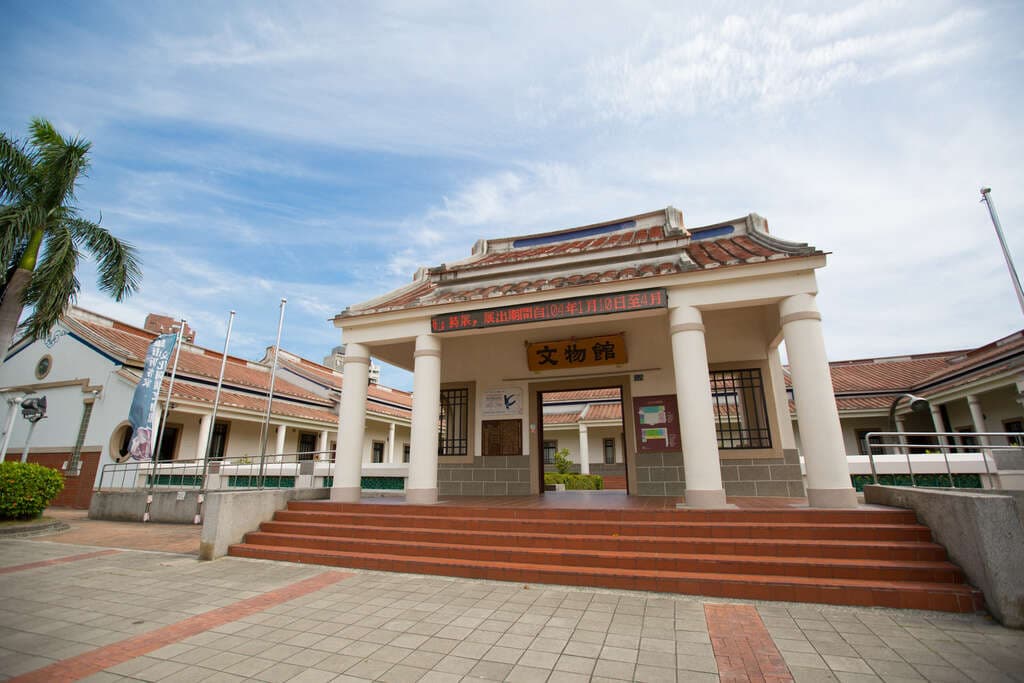
New Hakka Cultural Park
The Kaohsiung Hakka Cultural Museum, located within Sanmin No. 2 Park, spans an area of 800 ping (approximately 2,640 square meters), making it Taiwan's largest Hakka museum. Its design draws inspiration from Hakka archi…
Visitor Essentials
The Kaohsiung Hakka Cultural Museum, located within Sanmin No. 2 Park, spans an area of 800 ping (approximately 2,640 square meters), making it Taiwan's largest Hakka museum. Its design draws inspiration from Hakka architecture in mainland China, featuring red tiles, glazed eaves, and a traditional Sanheyuan (three-sided compound) layout. The museum houses exhibition areas, offices, and a large conference hall. Its main focus is displaying Hakka artifacts, and it regularly organizes Hakka cultural activities to research traditional Hakka customs. The population of Kaohsiung was just over 130,000 in October 1945 (Minguo 34). It was only after the government relocated to Taiwan in 1949 (Minguo 38) that an influx of external population began. The earliest Hakka people settling in Taiwan began around 1921. Later, pioneers and elders from Hakka regions such as Taoyuan, Hsinchu, Miaoli, Fengyuan, Dongshi, Meinong, Neipu (Pingtung), and Zhutian once again moved in large numbers to Kaohsiung City to make a living. Most worked in agriculture or labor-intensive fields like transportation, enduring difficult lives. After decades of arduous work and diligent struggle by Hakka pioneers and elders in Kaohsiung City, Hakka people began to distinguish themselves in politics, economics, and education in Kaohsiung by late 1961 (Minguo 50), gaining respect and recognition from other ethnic groups. Following the establishment of the 'Kaohsiung City Chapter of the World Hakka Federation' in 1984 (Minguo 73), the chapter aims to unite approximately 270,000 Hakka compatriots in Kaohsiung City, along with members from various associations in Hsinchu, Miaoli, Taoyuan, Dongshi (Taichung), Meinong, Pingtung, Jiaoling, Meixian, and Wuhua. By collaborating with the World Hakka Federation, they collectively promote diligent cooperation among Hakka compatriots worldwide, both domestically and overseas, to foster cultural exchange and economic development. The Kaohsiung Baozhong Yimin Temple further unifies the spirit and heritage of the Hakka people, serving as a major hub for Hakka religious beliefs. The construction of the Hakka Cultural Museum by the Kaohsiung City Government in 1997 (Minguo 86) symbolizes the respect accorded to the Hakka people within Kaohsiung City's diverse communities.
Discover the Context
No stories linked yet.
Happening at New Hakka Cultural Park
View CalendarNo upcoming events at this venue.