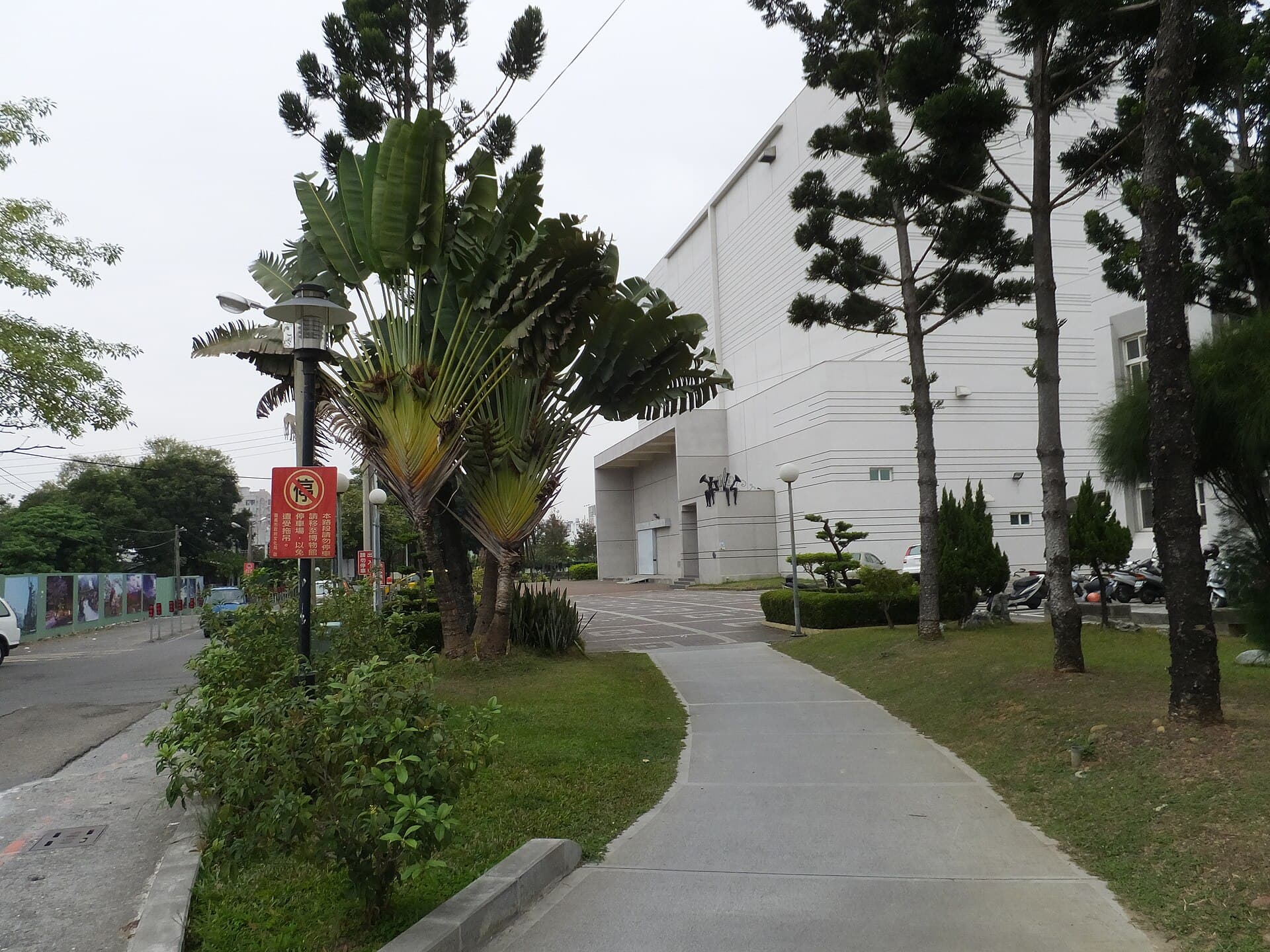
Chiayi Municipal Museum
The municipal museum, located within the Cultural Center Park, is responsible for the collection, research, exhibition, and education of related cultural artifacts. Its permanent exhibitions include the Geology Hall, the…
Visitor Essentials
The municipal museum, located within the Cultural Center Park, is responsible for the collection, research, exhibition, and education of related cultural artifacts. Its permanent exhibitions include the Geology Hall, the Fossil Hall, and the Chen Cheng-po Memorial Room. Additionally, there are three special exhibition spaces that feature rotating exhibits, and a Koji Pottery workshop and learning classrooms have been established to meet demand. Chiayi is the hometown of Koji Pottery, even dubbed 'Kagi-yaki' by the Japanese, and most Koji Pottery artisans received their training in Chiayi. Taiwanese folk commonly refer to Koji Pottery as 'Koji,' 'Koji figurines,' or 'Koji-zi.' In early times, it was primarily used as decoration in temple architecture. Its traditional themes center around figures such as fishermen, woodcutters, farmers, and scholars, complemented by insects, fish, birds, beasts, flowers, plants, utensils, and theatrical scenes, clearly distinguishing main and secondary elements and creating a harmonious composition. Koji Pottery is often installed high up in temples, commonly found on wall panels, main ridges, extended ridges, roof bands, gable ends, bird rests, eaves, and spirit screens. Due to its combination of warm and vibrant colors, resembling precious jewels and jade and glittering brilliantly, Koji Pottery gradually transitioned from temple decoration into living room ornaments, becoming prized possessions for private collectors. Ye Wang, revered as the pioneering founder of Taiwanese Koji Pottery, was born in Chiayi in 1826. In his youth, he apprenticed with Guangdong masters who came to Taiwan to build temples and create Koji Pottery. Coupled with his innate talent, he became the foremost figure in Taiwanese Koji Pottery. Ye Wang's creations are known for their vivid forms, intricate detailing, and exceptional use of color. His works have garnered international acclaim, earning him the reputation of 'Taiwan's unique skill' and establishing the distinctive artistic status of Taiwanese Koji Pottery. The development of Taiwanese Koji Pottery began with Ye Lin-zhi (Ye Wang), and later, Lin Tian-mu made significant contributions to the art. Both were natives of Chiayi. Consequently, in 1997 (86th year of the Republic), Chiayi City organized the first Koji Pottery Art Festival to revitalize this cultural heritage and establish Koji Pottery as a defining cultural feature of the city. The Koji Pottery Museum officially opened on May 13, 2000 (89th year of the Republic).
Discover the Context
No stories linked yet.
Happening at Chiayi Municipal Museum
View CalendarNo upcoming events at this venue.