Image Museum
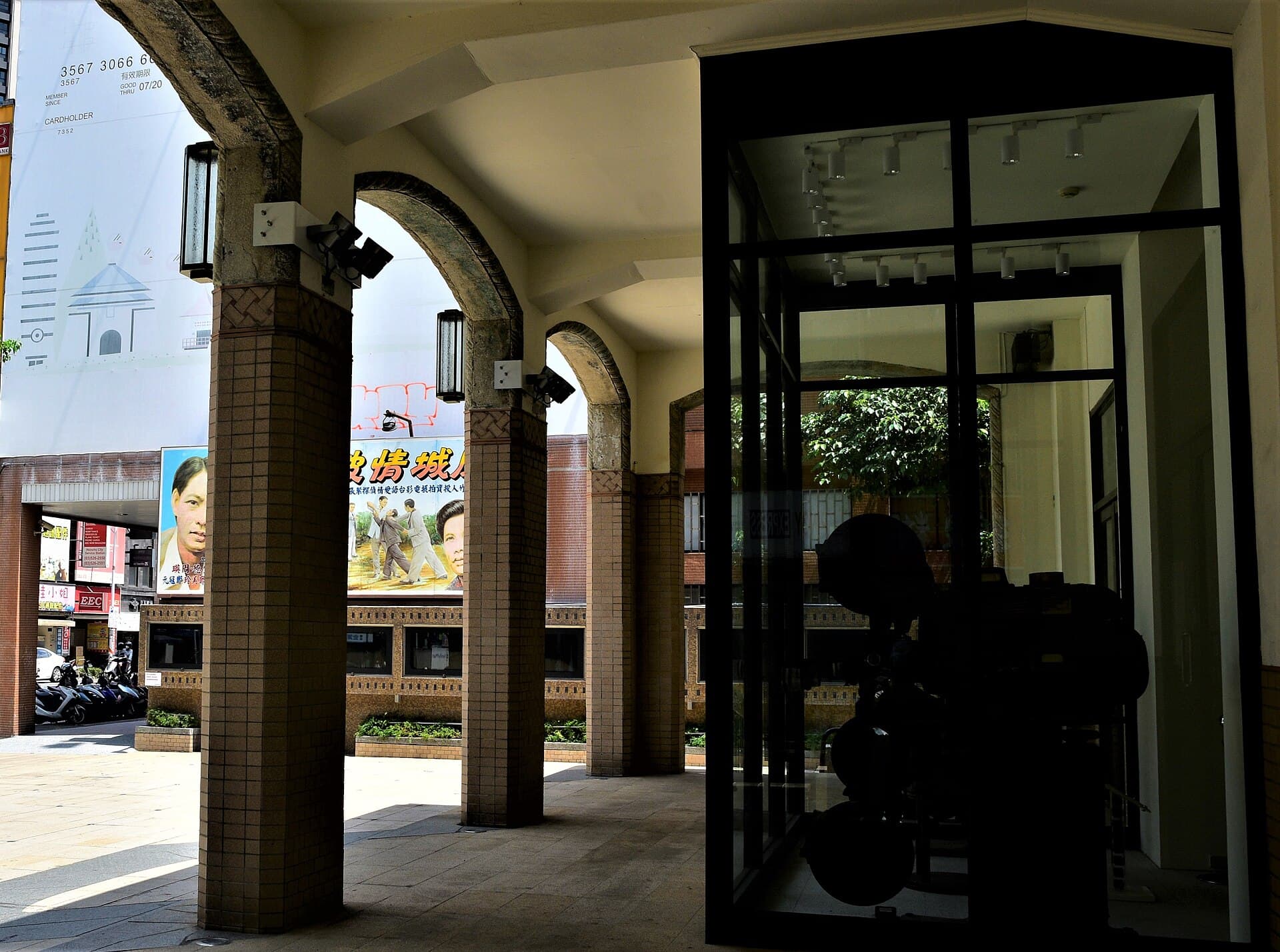
The Yorakukan Theater, built in 1933, was Taiwan's first air-conditioned cinema, with a seating capacity of approximately five hundred. Its architectural style blended ancient Roman and Arabic influences, making it one o…
Visitor Essentials
The Yorakukan Theater, built in 1933, was Taiwan's first air-conditioned cinema, with a seating capacity of approximately five hundred. Its architectural style blended ancient Roman and Arabic influences, making it one of the luxurious public buildings used by the Japanese colonial government to showcase its national power. In 1944, it was bombed during World War II, with about one-third of its second floor damaged. After Japan's defeat in 1946 (the 35th year of the Republic of China calendar), the Yorakukan Theater was renamed "Guomin Grand Theater" and brought under government management. Besides showing movies, it also hosted concerts and military conscription events; whenever a popular film was released, the area would be bustling with crowds. In a simple agricultural society with limited leisure options, it became a prominent landmark that held the living memories of the citizens. After Hsinchu County and City separated in the 1980s, its operation faced entanglements over county and city properties. Concurrently, the video rental industry emerged, and entertainment media continuously innovated. The theater gradually failed to withstand market challenges and finally ceased operations in 1991 (the 80th year of the Republic of China calendar). In 1996 (the 85th year of the Republic of China calendar), during the "National Arts Festival" organized by the Council for Cultural Affairs, the Hsinchu City Cultural Center held the "Wind City Love Waves" series of events in the deserted and idle square of the Guomin Grand Theater, successfully evoking the memories and emotions of the citizens. Under the active planning and advocacy of several local dignitaries and film scholars, the National Film Archive was commissioned to propose a blueprint for an "Image Museum." In 1998 (the 87th year of the Republic of China calendar), the Council for Cultural Affairs allocated funds and held an open competition, selecting architect Lin Chih-cheng to be responsible for the "Historic Building Reuse" renovation project. Construction began on March 8, 1999 (the 88th year of the Republic of China calendar), and it was completed and opened on May 21, 2000 (the 89th year of the Republic of China calendar). After opening and commencing operations in 2000 (the 89th year of the Republic of China calendar), its mission has been to inherit the historical and cultural experience of the Guomin Grand Theater and to create an image space that is jointly owned and shared by citizens. In addition to promoting and screening non-mainstream and nostalgic films, it also serves functions such as film artifact collection, exhibition, research, and education.
Discover the Context
No stories linked yet.
Happening at Image Museum
View CalendarNo upcoming events at this venue.