Jiufen
Cultural History: Jiufen is part of Ruifang District, New Taipei City. Before the gold mining industry boomed, Jiufen's primary industry was camphor extraction and camphor oil production. There were a total of ninety cam…
Visitor Essentials
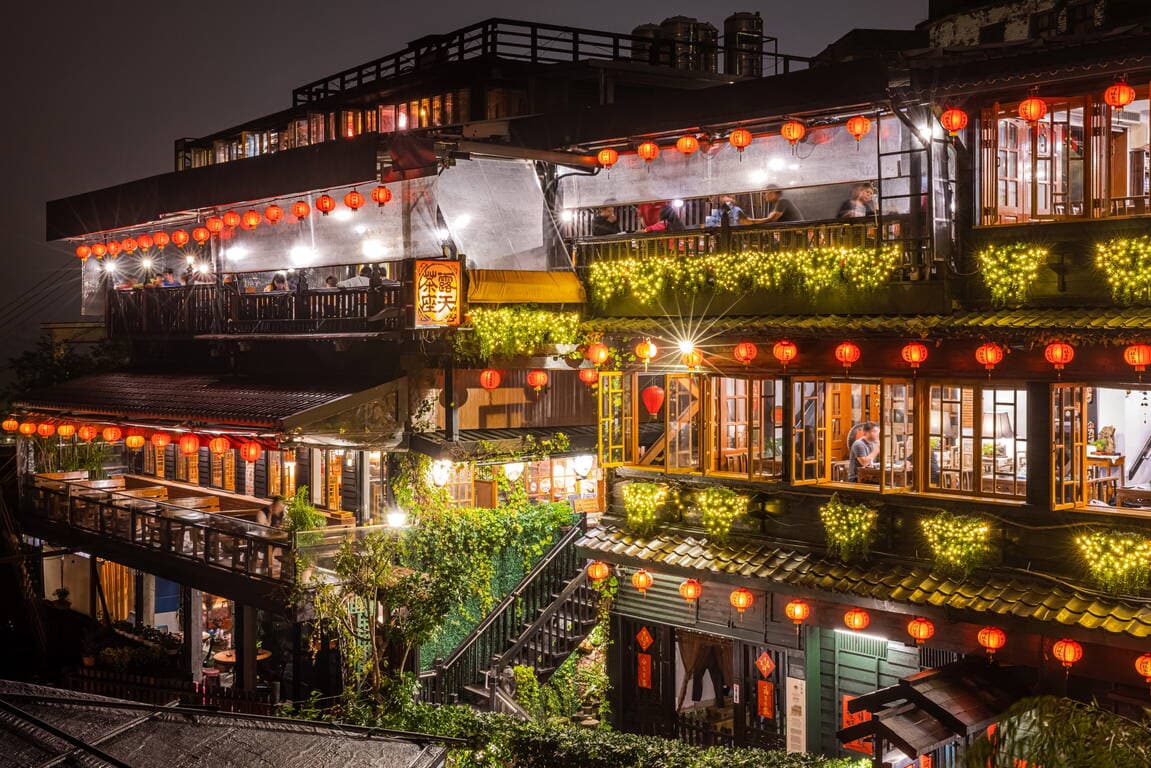
Cultural History: Jiufen is part of Ruifang District, New Taipei City. Before the gold mining industry boomed, Jiufen's primary industry was camphor extraction and camphor oil production. There were a total of ninety camphor stoves here, and ten stoves were considered 'one share' (一份). Thus, there were nine 'shares' (九份), and over time, this evolved into the place name Jiufen. The development of Jiufen can be described as a history of early settlers mining for gold. It flourished with the influx of gold prospectors and faded with the decline of the gold mining industry. Around 1890 AD, residents discovered a gold vein near Xiaojinguagua, not far from Fushan Temple's Land God shrine. The village immediately attracted three to four thousand households of gold panners, marking Jiufen's first period of prosperity. During the Japanese colonial era, large quantities of gold were shipped to Japan, causing Jiufen's gold production to reach its peak. In the 1930s, the rising gold price created a magnificent and prosperous situation, earning it the title 'Asia's Gold Capital.' At that time, looking at the Jiufen settlement from the sea, the lights were brilliant, and people called it 'Little Shanghai' or 'Little Hong Kong.' After World War II, gold mining operations depleted the veins, leading to a significant drop in production. Ultimately, the industry ceased due to a lack of mining value and mismanagement, becoming a part of history. Sometime later, after the film 'A City of Sadness' caused a sensation at the Venice Film Festival, this small town, which had declined for decades, once again captivated people's attention and memories for the third time. The once-prosperous old streets, abandoned mine shafts, unique mining landscape, and gold panning history, repeatedly publicized by the media, attracted artists from all corners seeking inspiration. Nostalgic tourists also came in large numbers to reminisce about the past and savor the emotional world within this 'City of Sadness.' Seasonal Scenery: Jiufen, with its mountain barrier and vast sea views, boasts unparalleled mountain and sea scenery, with distinct characteristics in spring, summer, autumn, winter, sunny or rainy days, morning, dusk, and night. From any sea-facing window, balcony, or courtyard in the area, one can enjoy natural landscapes varying by season and time, including the lush, pointed 'Keelung Mountain' and the expansive, clear blue harbor coastline. 'Cherry blossoms in spring, refreshing breezes in summer, silvergrass in autumn, and misty clouds in winter' perfectly describe Jiufen's beautiful and diverse seasonal appearances. In spring, during an outing, a few clumps of cherry blossoms greet visitors at the Taiyang Company Ruifang Mine Office and Fushan Temple courtyard. Summer brings mountain mist and cool breezes; the temperature difference causes mountain winds during the day and sea winds at night, completely dispelling the summer heat. In late autumn, silvergrass blooms, swaying romantically like waves across the mountains with the northeast monsoon. Standing at the pavilion above Songde Park, Daguanlin, Keelung Mountain, and along County Highway 102 towards Shuangxi, one can feel a gentle poetic charm. Winter brings continuous drizzle; the stone steps flow like waterfalls in the fine rain, and the biting cold, swirling mist adds another ephemeral, desolate, and bleak aspect to Jiufen. If there are no swirling clouds or mist during the day, the sea is clear and blue, offering distant views of layered waves; after nightfall, the scattered fishing lights on the sea further highlight the mountain town's nocturnal tranquility. Other sights, such as watching the sunrise and rising clouds, evening glow filling the sky, stargazing, and moon viewing, are all moving and unforgettable. Jinguashi: In Jinguashi, after the 1960s, as the mineral veins dried up, both gold mining businesses became history. However, the remaining mining landscape became a popular tourist destination in the late 1970s with the rise of nostalgia.
Discover the Context
No stories linked yet.
Happening at Jiufen
View CalendarNo upcoming events at this venue.