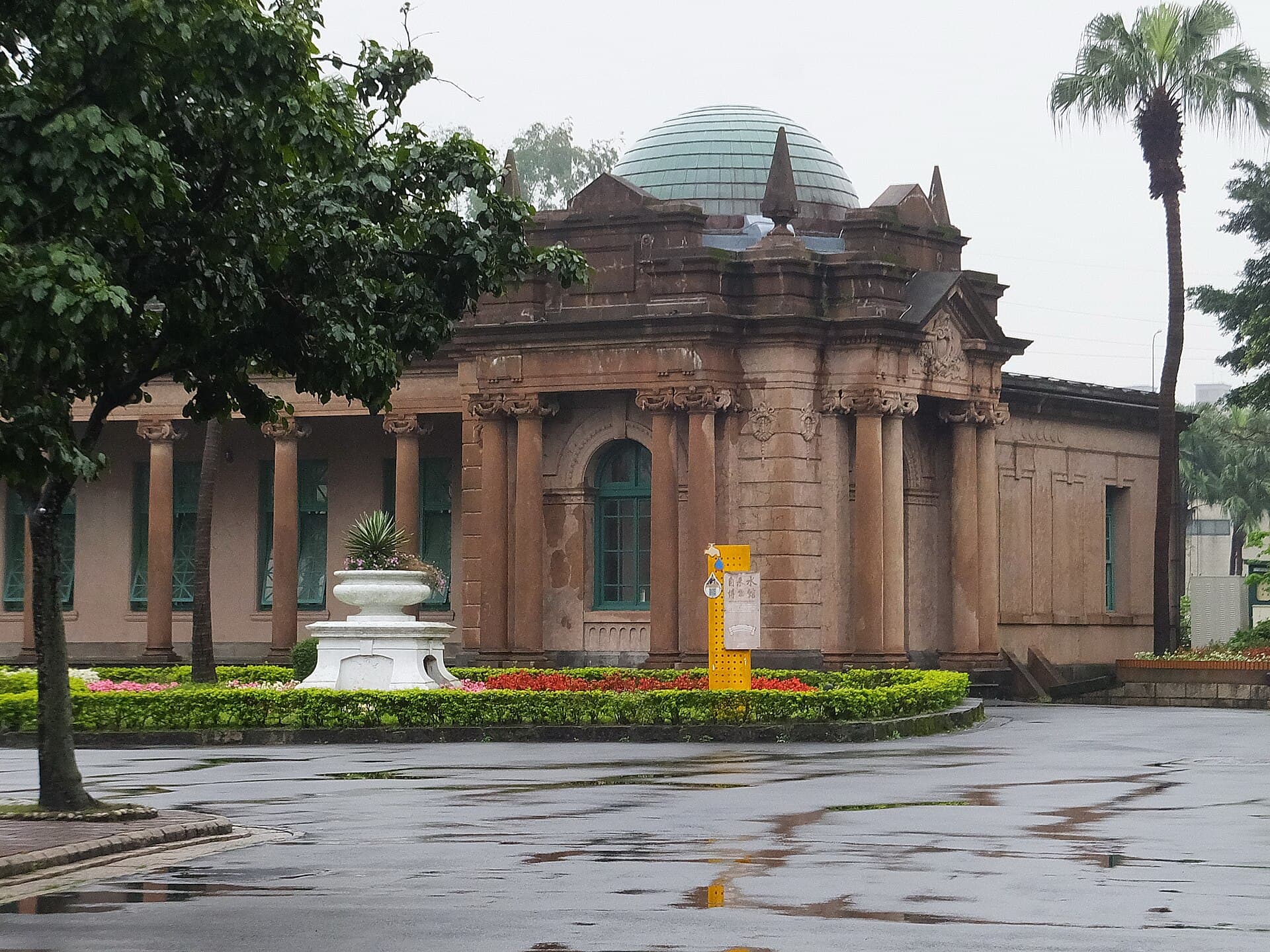
Taipei Water Park - Museum of Drinking Water
As early as the Qing Dynasty's Liu Ming-chuan era in Taiwan, deep wells were dug in Taipei's Beimen Street (now Hengyang Road), Shifang Street (now Bo'ai Road), Ximen Street, and other locations to supply water, marking…
Visitor Essentials
As early as the Qing Dynasty's Liu Ming-chuan era in Taiwan, deep wells were dug in Taipei's Beimen Street (now Hengyang Road), Shifang Street (now Bo'ai Road), Ximen Street, and other locations to supply water, marking the beginning of Taipei's public water supply. At the beginning of Japanese rule in Taiwan, plans for tap water facilities were initiated. Subsequently, water intakes, pumping station buildings and equipment, water transmission and distribution pipes, water purification plants, and reservoirs were completed. In 1909, the water purification plant began supplying water, with a daily output of 20,000 tons, serving 120,000 people. It was named the Taipei Water Source Slow Filtration Plant. From then on, Taipei's tap water system began its transition to modernization. After World War II, in response to water demand, the Taipei City Government expanded its pumping and water purification facilities several times, continuously drawing water from the Xindian River to supply the Taipei area. Until 1977 (Republic of China calendar year 66), the pumping station officially completed its mission of 'pumping raw water and transmitting purified water' and retired from service. Since its establishment in 1908, it has a history of over a hundred years. In June 1993 (Republic of China calendar year 82), it was designated a Level 3 historic monument by the Ministry of the Interior (now a municipal historic monument). Subsequently, the Taipei Water Department invested funds in its restoration, returning the pumping station to its original appearance. It also extensively collected historical photos and equipment related to tap water, enriching the overall content and related peripheral facilities, thus completing the nation's first Museum of Drinking Water, which opened to the public in 1998 (Republic of China calendar year 87). The museum's exterior emulates Western Baroque architectural design, featuring an elegant and retro appearance, with special functional designs to accommodate the needs of water pumping. Inside, it displays the development process of Taiwan's modern tap water system, showcasing the historical evolution of our ancestors' efforts in water resource development, including antique pumping equipment, various inspection and maintenance equipment, and fire-fighting equipment, all of which are invaluable historical testimonies. Visitors can also experience the actual water treatment process firsthand, including modern chemical dosing and disinfection, and strict quality control, allowing them to truly appreciate the preciousness of water resources. In addition, the Water Park also features various themed areas: the Mist Garden offers visitors spaces to observe, get close to, and play with water; the landscaped gardens, waterside courtyards, and pipe sculpture area provide places for relaxation and enjoyment; the water transmission and distribution equipment area and the Gongguan Water Purification Plant demonstrate the actual water supply process; and Gongguan Guanyin Mountain features well-established mountain trails, allowing visitors to leisurely hike and connect with nature.
Discover the Context
No stories linked yet.
Happening at Taipei Water Park - Museum of Drinking Water
View CalendarNo upcoming events at this venue.