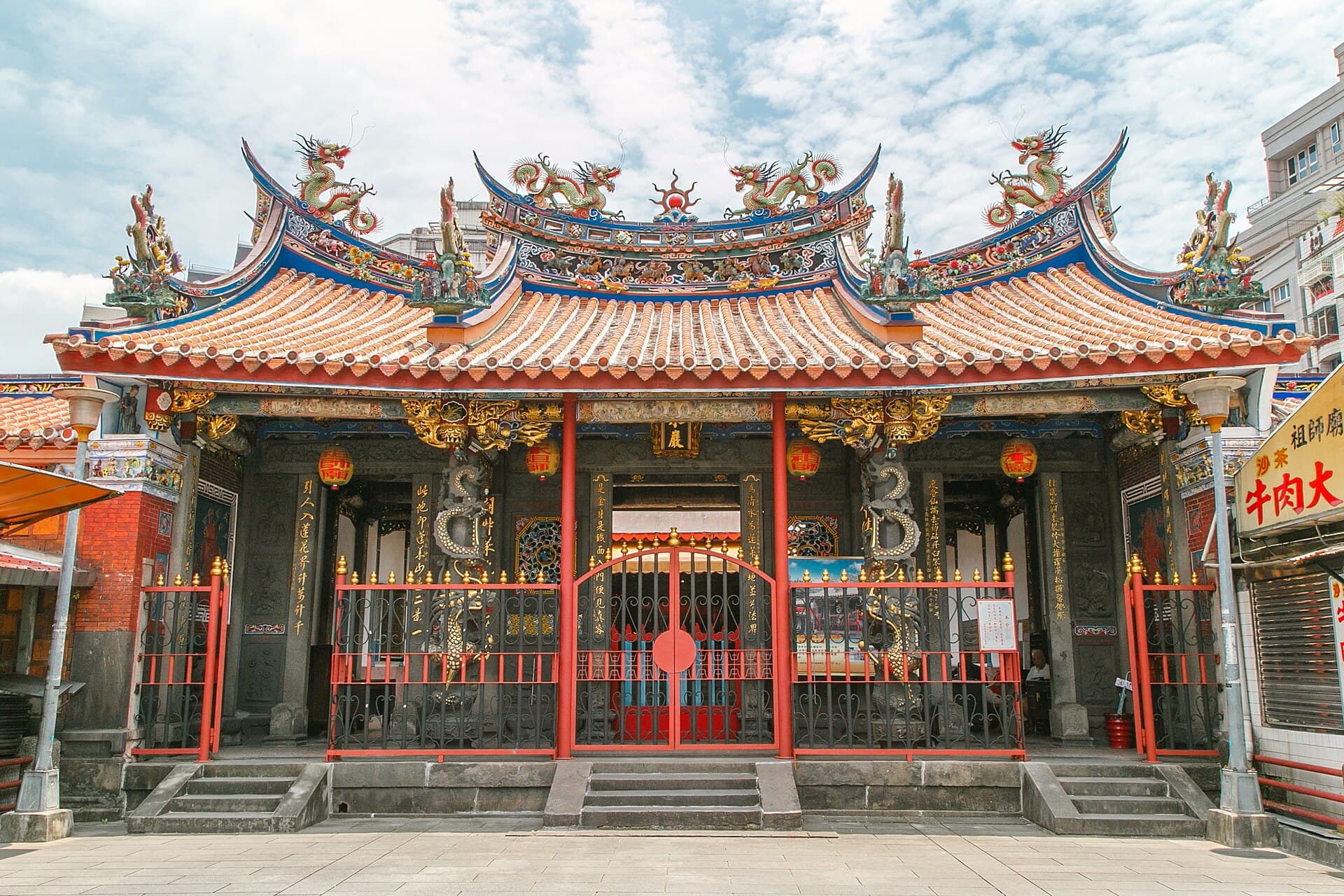
Qingshuiyan Zushi Temple
Mengjia Qingshuiyan, also known as "Zushi Temple," was established in 1787. Along with Longshan Temple of Mengjia and Baoan Temple of Dalongdong, it is known as one of the "Three Great Temples of Taipei." The principal d…
Visitor Essentials
Mengjia Qingshuiyan, also known as "Zushi Temple," was established in 1787. Along with Longshan Temple of Mengjia and Baoan Temple of Dalongdong, it is known as one of the "Three Great Temples of Taipei." The principal deity, Qingshui Zushi (Patriarch Qingshui) Chen Zhaoying, was brought from their hometown by immigrants from Anxi, Fujian. There are a total of seven statues, with the Penglai Zushi being the most efficacious, also known as the "Nose-dropping Zushi." Legend has it that during natural disasters or cataclysms, the Zushi's nose will fall off on its own to warn devotees, and will only restore itself after the calamity has passed. Zushi Temple has a long history. In front of the central gate of the front hall, there is a pair of sturdy dragon pillars. The side gable walls feature brick carvings from the late 18th and early 19th centuries, which are the oldest existing artworks in the temple. Furthermore, carvings of imperial reign eras from the Qing dynasty period can be found on the beam frames, stone walls, and dragon pillars, all of which are robust and unadorned works. For this reason, Zushi Temple was once regarded as the Taiwanese temple best representing the unique characteristics and artistic standards of the mid-Qing period. During the Japanese colonial era, the temple served as the site for the Prefectural Second Middle School, which was the predecessor of today's Chenggong High School.
Discover the Context
No stories linked yet.
Happening at Qingshuiyan Zushi Temple
View CalendarNo upcoming events at this venue.