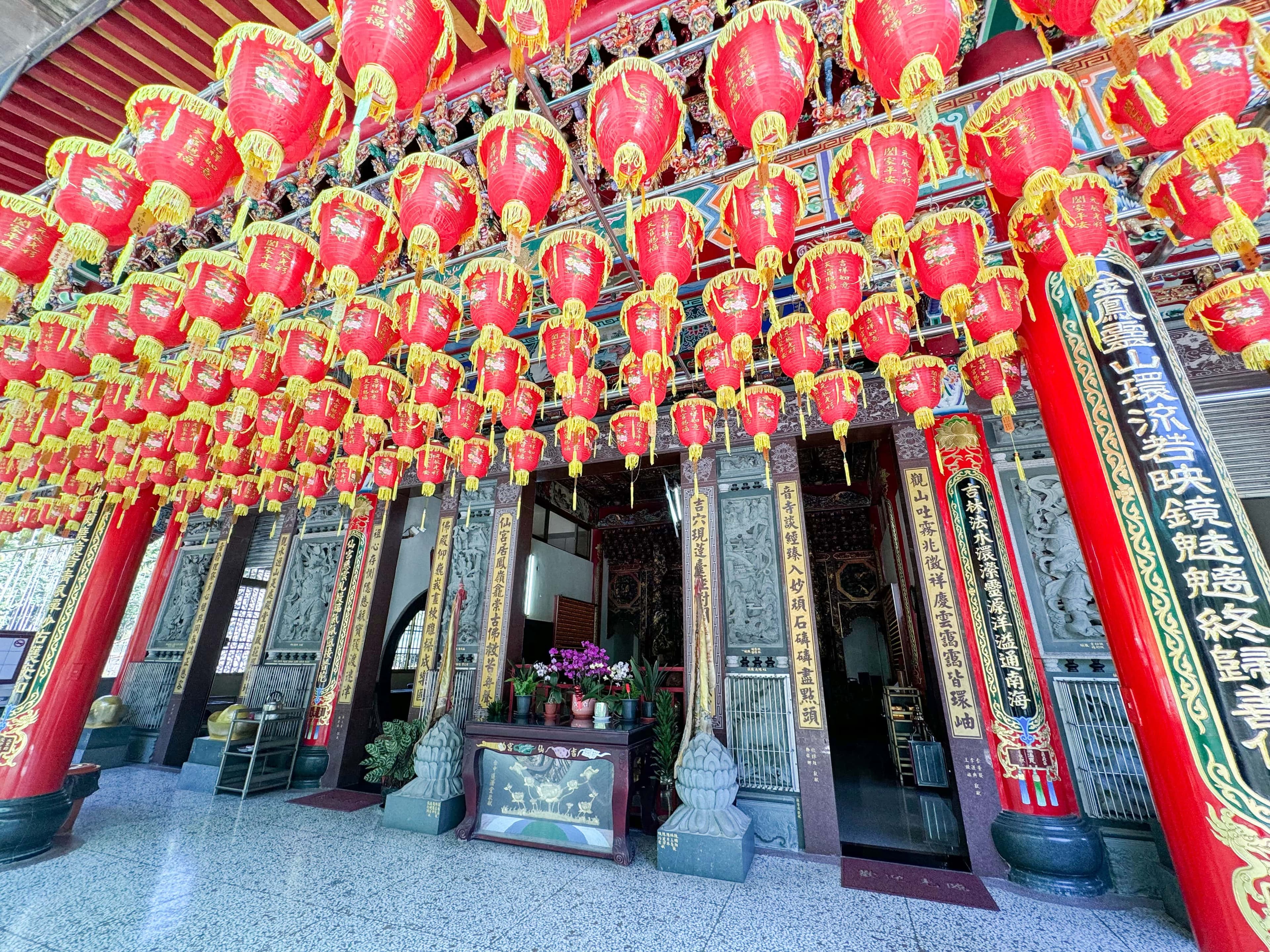
Shiguanin Jixian Temple
During the Japanese colonial era, two years before the establishment of the Republic of China (1910), the Wucheng and Xinxing villages had naturally growing camphor trees of excellent quality. The Japanese valued camphor…
Visitor Essentials
24小時全日開放
During the Japanese colonial era, two years before the establishment of the Republic of China (1910), the Wucheng and Xinxing villages had naturally growing camphor trees of excellent quality. The Japanese valued camphor oil, and the workers who produced it were known as 'Naoding' (camphor workers). While transporting camphor, after a meal, one of the 'Naoding' suddenly suffered from severe abdominal pain and collapsed at this location. Another worker anxiously spotted some water under a rock formation nearby, immediately fetched the clear water, and gave it to him to drink. The abdominal pain completely subsided, and he felt completely revitalized. Three years later, in May of the first year of the Republic of China (1912), during the Dragon Boat Festival, dark clouds suddenly covered the sky, bringing strong winds and heavy rain. Landslides and ground fissures occurred, revealing seven stone lotus flowers that emerged from the sunken earth. The next day, porters from Jiji saw these phenomena and quickly spread the word, bringing twenty to thirty 'Naoding' to visit. Subsequently, a famous local geomancer named the site 'Guanyin's Lotus Seat', and the 'Naoding' promptly gathered for a meeting to build a temple. In the second year of the Republic of China (1913), a wooden Guanyin Temple was constructed and named Jixian Temple, dedicated to Stone Guanyin, the Buddha Mother and Bodhisattva. Later, a railway was built on the opposite side, utilizing human-powered trolleys. While this development improved transportation, an epidemic of fever and chills suddenly spread throughout the region, causing people to look pale and yellow-faced, with aching limbs. The Guanyin Buddha Mother of Jixian Temple manifested her divine presence and, out of great compassion, appeared in dreams to faithful devotees, both local and from afar, instructing them to immediately come and fetch clear water. Between 1943 and 1945 (the 32nd to 34th years of the Republic of China), American planes bombed the Daguan Power Plant every three to five days. The people could not live in peace; their hearts were filled with fear and they couldn't rest. The Guanyin Buddha Mother of Jixian Temple displayed great divine power, manifesting her presence and saving all local and passing citizens, ensuring no lives were lost during the bombings. On October 25, 1945 (the 34th year of the Republic of China), Taiwan was unconditionally retroceded. The people thanked the Buddha Mother for her compassionate salvation. In 1946 (the 35th year of the Republic of China), the village gentry collectively decided to rebuild the temple with a brick structure. Later, in 1982 (the 71st year of the Republic of China), after the Minghu Pumped-Storage Power Plant was completed, the road was widened to two lanes, making transportation convenient today.
Discover the Context
No stories linked yet.
Happening at Shiguanin Jixian Temple
View CalendarNo upcoming events at this venue.