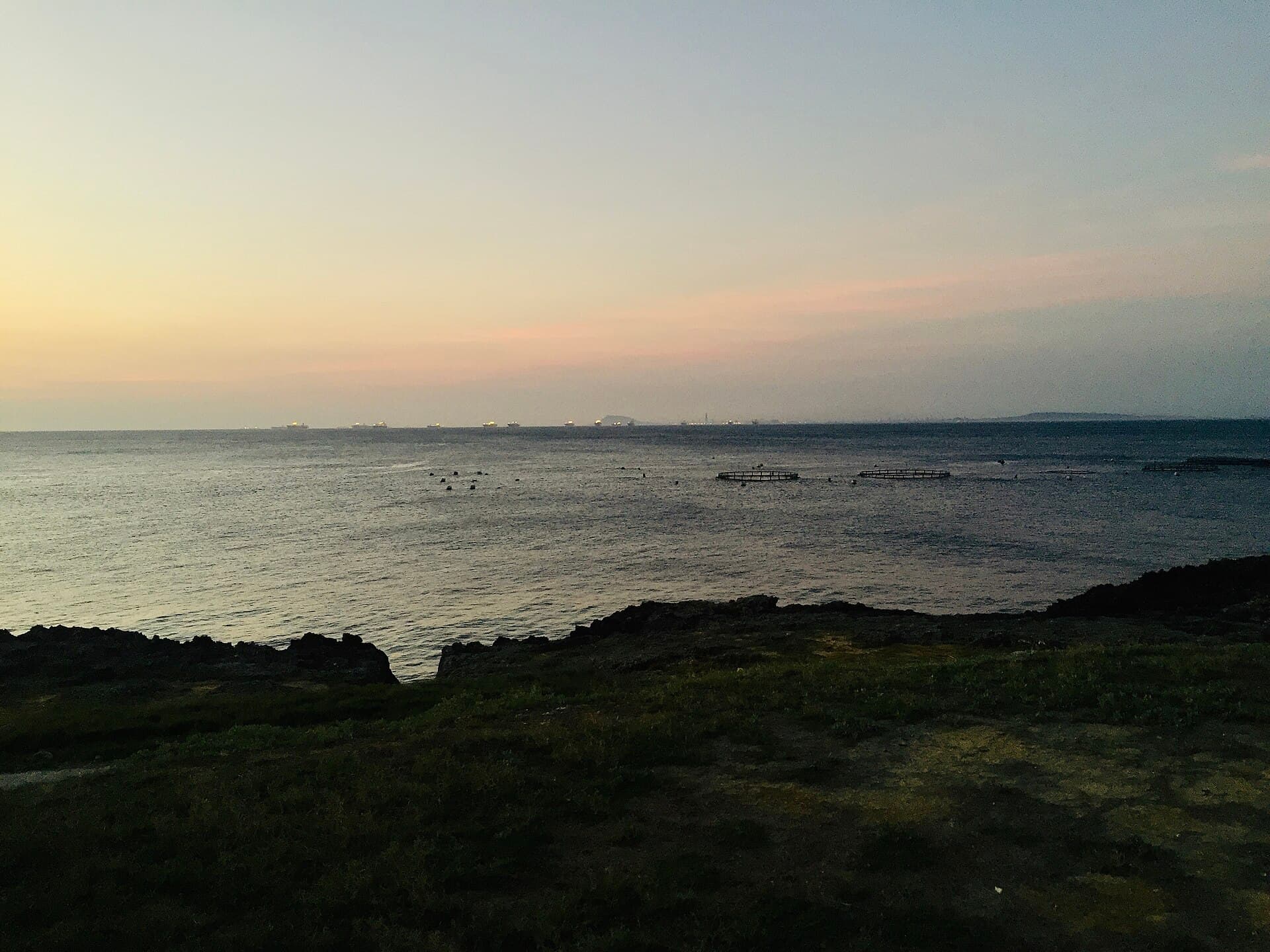
Duoziping Intertidal Zone
Xiaoliuqiu's intertidal zone is a very popular ecological live show. The programs performed during the day and night are diverse. On a few days each month, low tide occurs at night. In the dark night, guided by moonlight…
Visitor Essentials
全日開放
Xiaoliuqiu's intertidal zone is a very popular ecological live show. The programs performed during the day and night are diverse. On a few days each month, low tide occurs at night. In the dark night, guided by moonlight and the residual glow of flashlights, exploring the vast ocean offers an indescribable thrill. Although visibility is a bit poor at night, not as clear as during the day, visiting the intertidal zone under a half-moon, gazing at the misty shimmering water and dark silhouettes of coral reefs, listening to the gentle flow of the tides, and walking on the intertidal rocks—the seaside under the moonlight unexpectedly reveals a deep romance. The Duoziping Intertidal Zone is located on the northwest side of Liuchiu Island, adjacent to the south side of the campsite. The two locations are about 300 meters apart. The intertidal platform has a gentle terrain and is approximately 1600 meters long. To get to Duoziping, you can descend about 50 meters from the fork on the Round-the-Island Road towards Shamakii Ecological Campsite. Along the path extending from the campsite, you might faintly spot birds like Spotted Doves, Chinese Bulbuls, Red-backed Shrikes, and Sparrows seemingly greeting you. This area boasts natural landscapes such as wide marine erosion platforms and sandy beaches, fostering a rich diversity of benthic organisms. These include coral colonies in the shallow flats, countless fish, shellfish, sea urchins, sea hares, sand dollars, various hermit crabs, Mesechinus sea urchins, and Thalassia algae, among other intertidal creatures. If guided by a local ecotourism leader, careful observation at night might reveal small sea snakes and shrimp active in this area. However, when observing, remember not to selfishly remove them; please return them to their original location to protect the local natural resources. Broad-clawed Hermit Crab: The carapace length of the broad-clawed hermit crab can reach 1.5 cm, and its body color ranges from pale olive green to grayish-black. Blue-tipped Sea Star: Currently, in Dapeng Bay, various types of fiddler crabs have been found, including *Uca crassipes*, *Uca lactea*, *Uca borealis*, and *Uca triangularis*. Male fiddler crabs possess a distinctly large claw, which can extend up to three times the length of their carapace. The body color of fiddler crabs changes with time and tide, appearing darker during the day and lighter at night. Fiddler crabs cannot adapt to overly dry environments; they mostly inhabit the intertidal zones of Dapeng Bay, and can be found in mangroves, along bay shorelines, and on sandy beaches. Mesocentrotus nudus Sea Urchin: Mangroves are a group of tall trees or shrubs that grow along coastlines or at the confluence of rivers and seas, generally distributed in tropical and subtropical regions. These plants typically possess functions such as salt tolerance, wind resistance, sand stabilization, slowing currents, dissipating waves, purifying water, protecting embankments, providing habitat for wildlife, and creating beautiful environments. This area represents the southern limit of mangrove distribution in Taiwan, with only *Avicennia marina* (from the Verbenaceae family) currently remaining. The distribution areas are mainly concentrated in the Donggang First Drainage Ditch, Qimei Town area, and parts of the Dapeng Bay coastline.
Discover the Context
No stories linked yet.
Happening at Duoziping Intertidal Zone
View CalendarNo upcoming events at this venue.