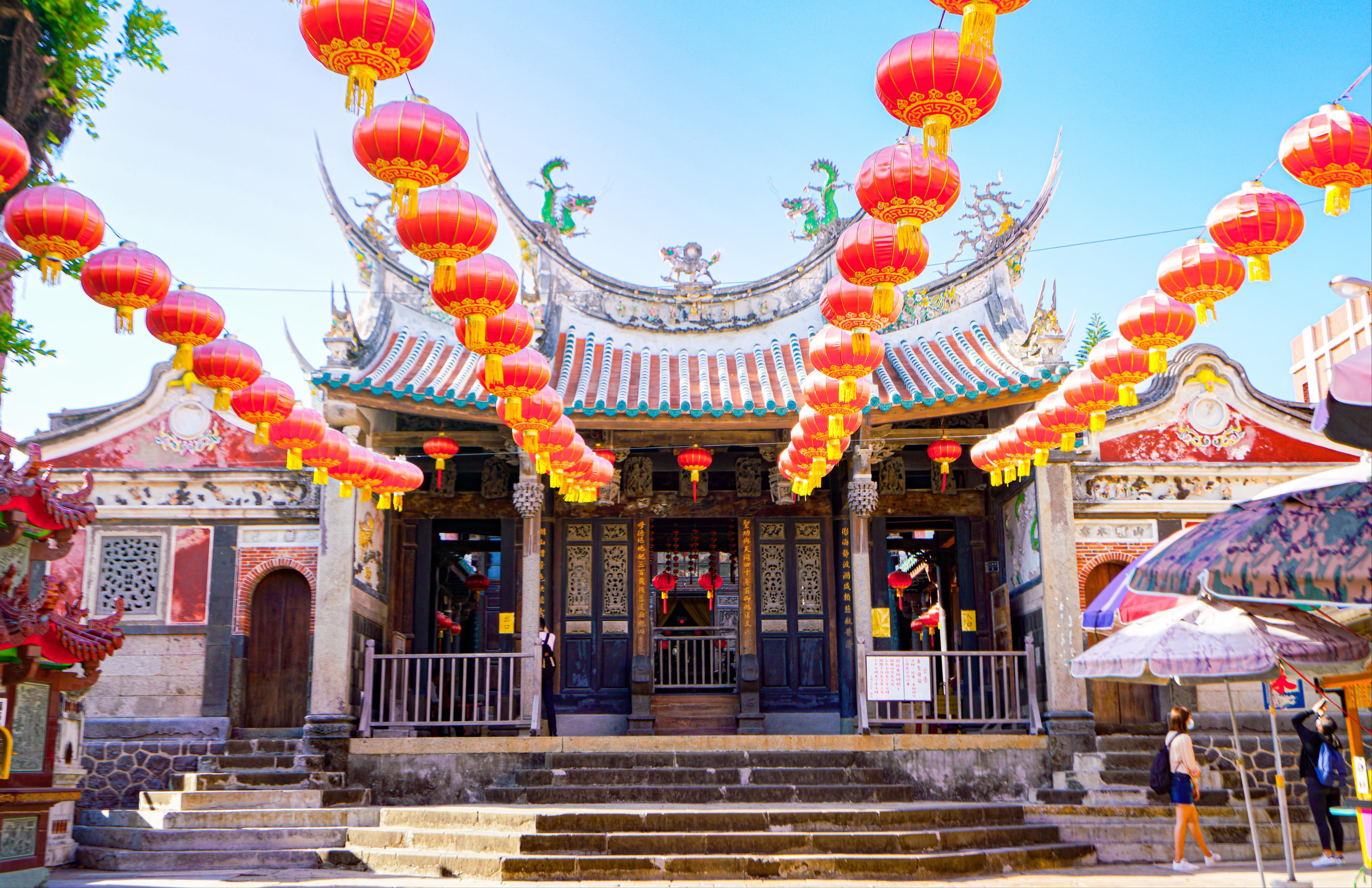
Penghu Tianhou Temple
For the people of the sea, Mazu, the goddess of the sea, is naturally an important spiritual anchor. Penghu Tianhou Temple is the earliest Mazu temple established in Taiwan and is designated a National Historic Site. In…
Visitor Essentials
For the people of the sea, Mazu, the goddess of the sea, is naturally an important spiritual anchor. Penghu Tianhou Temple is the earliest Mazu temple established in Taiwan and is designated a National Historic Site. In earlier times, fishermen from the coastal areas of Fujian, China, would enshrine Mazu on their boats to pray for safe voyages and smooth operations. Later, after settling in Penghu, they moved her worship to land and built a temple. Time flew by, and in the blink of an eye, Mazu had protected the residents of Penghu County for over 400 years. At that time, the temple was called names such as "Niangong," "Niangniangong," "Niangmagong," "Maniangong," or "Mazugong." Even the ferry terminal was referred to as "Mazugong," which was then shortened to "Magong." As "Magong" (媽宮) and "Magong" (馬公) are homophones in Japanese, and the latter has fewer strokes and is easier to recognize, the Japanese had already marked "Magong" on military maps even before their army occupied Taiwan and Penghu. After the Japanese army took control of Taiwan, they immediately established the Magong Naval Port Department in Penghu in 1901, but the administrative district retained its Qing Dynasty name, "Magong'ao." It was not until 1920 that "Magong'ao" was officially changed to "Magong Street," thus becoming the formal origin of the place name "Magong."
Discover the Context
No stories linked yet.
Happening at Penghu Tianhou Temple
View CalendarNo upcoming events at this venue.