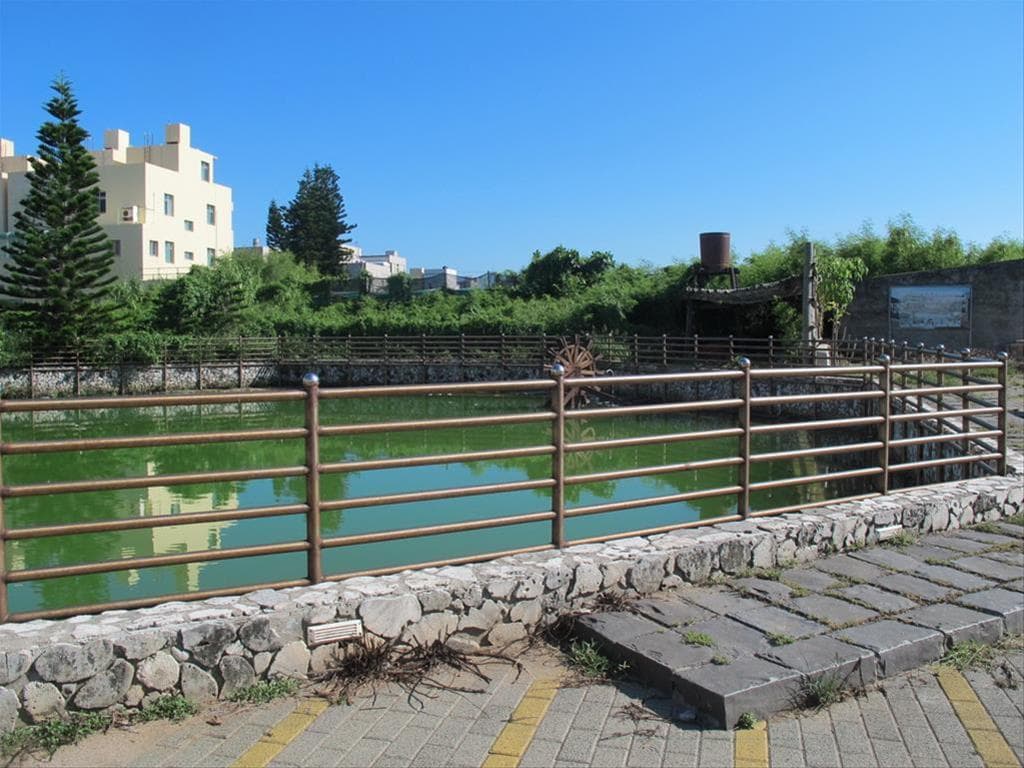
Chongguang Village - Zhangshui Water God Stele
Before World War II, Chongguang Village was commonly known as Houkutuan. The terrain is higher in the south and lower in the north. In earlier times, rainwater would accumulate, forming three ponds, namely 'Sun Pond,' 'M…
Visitor Essentials
Before World War II, Chongguang Village was commonly known as Houkutuan. The terrain is higher in the south and lower in the north. In earlier times, rainwater would accumulate, forming three ponds, namely 'Sun Pond,' 'Middle Pond,' and 'Moon Pond.' In 1935, during the expansion of Weiling Temple, the Lingxiao Pagoda was renovated, and the 'Zhangshui Water God' stone tablet was installed. It was reportedly meant to ward off the 'water arrow' (a malevolent water current) flowing from the southern irrigation ditches towards the settlement. Furthermore, the bow-shaped side of Moon Pond faces the 'Roaring Gate' (Hǎomén) to the north, thereby serving to break the 'Roaring Gate' and suppress negative water influences (shuǐ shà).<br />Source: Partially excerpted from 'Introduction to the Sun and Moon Ponds of Chongguang Village'.
Discover the Context
No stories linked yet.
Happening at Chongguang Village - Zhangshui Water God Stele
View CalendarNo upcoming events at this venue.