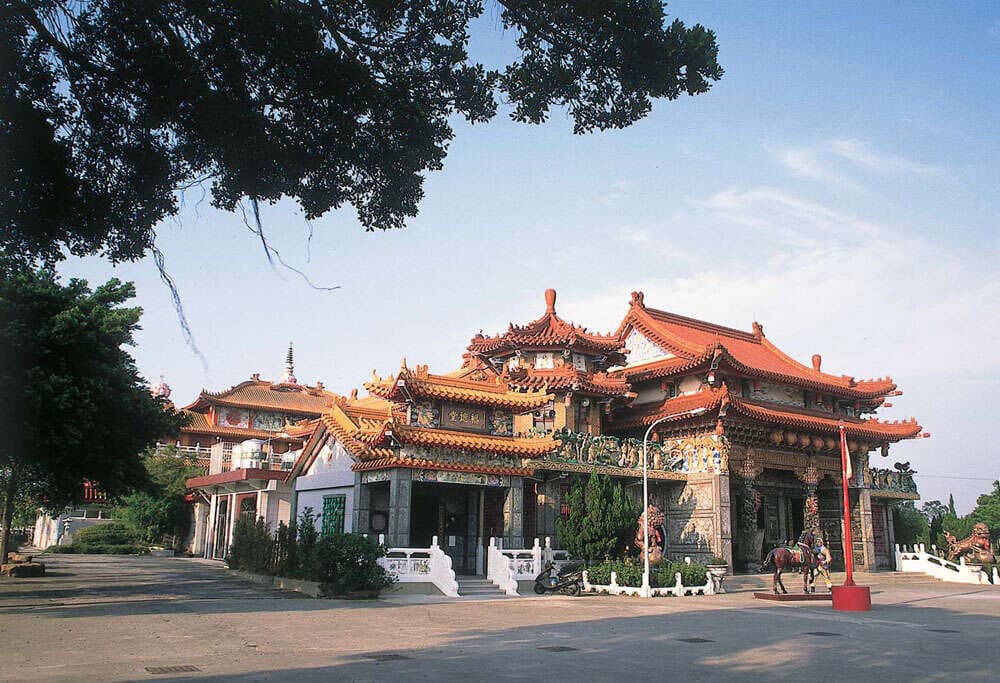
Tianwen Temple
Covering an area of three hectares, Tianwen Temple is the largest temple in the Yong'an area, built in the style of a northern Chinese temple. It primarily enshrines Xu Fu Qiansui (Xu Shiji), a famous general from the Ta…
Visitor Essentials
Covering an area of three hectares, Tianwen Temple is the largest temple in the Yong'an area, built in the style of a northern Chinese temple. It primarily enshrines Xu Fu Qiansui (Xu Shiji), a famous general from the Tang Dynasty. The temple's origin dates back to the first 'Wang Jiao' ritual performed by Xu Fu Qiansui deities in Xiagaodian, who descended by imperial decree to conduct a heavenly inspection tour on behalf of the divine. The temple was established in 1959 (Republic of China year 48). Construction commenced in March 1977 (ROC year 66) and was completed in 1979 (ROC year 68). The front hall enshrines the main deity, Great General Xu Fu Qiansui, who guards the Eastern Lands. At the main entrance outside the hall, flagpoles are erected with banners, symbolizing a declaration to the world that this is the residence of the Great General who guards the Eastern Lands. Behind them, the General's subordinates are depicted leading celestial steeds, indicating that horses are always prepared and 'ready to depart at any moment,' signifying that the General is perpetually ready to embark on inspection tours to alleviate the suffering of the common people. Tianwen Temple's architectural style features a double-eaved hip-and-gable roof (known as 'Jiuji Palace' during the Song Dynasty), designed and constructed by the renowned temple architect Mr. Xiao Wansheng from central Taiwan. The courtyard features unique landscaping, and the east and west corridors are adorned with dragon motifs inspired by various historical cultural periods, differentiating it from other temples and forming a distinctive architectural characteristic. Every year on the 18th day of the first lunar month, Tianwen Temple celebrates the birthday of its principal deity, Xu Fu Qiansui, and other deities. Since 1980 (ROC year 69), the temple has organized calligraphy and plein-air painting competitions, centered around the themes of 'Spirituality,' 'Culture,' and 'Leisure.' These events integrate temple culture to showcase the local humanistic spirit. The series of activities includes not only calligraphy and painting competitions but also a static 'Tianwen Cultural Exhibition,' displaying the temple's accumulated cultural treasures over the years. Additionally, there are activities such as 'passing the peace barrier' (過平安關) and 'divining for the scholar's brush' (擲筊求狀元筆, also known as the 'Wangye's brush'). Every year, many young people are attracted to partake in the 'poe-divination' hoping to obtain the divine brush to help them succeed in various exams and achieve top honors.
Discover the Context
No stories linked yet.
Happening at Tianwen Temple
View CalendarNo upcoming events at this venue.