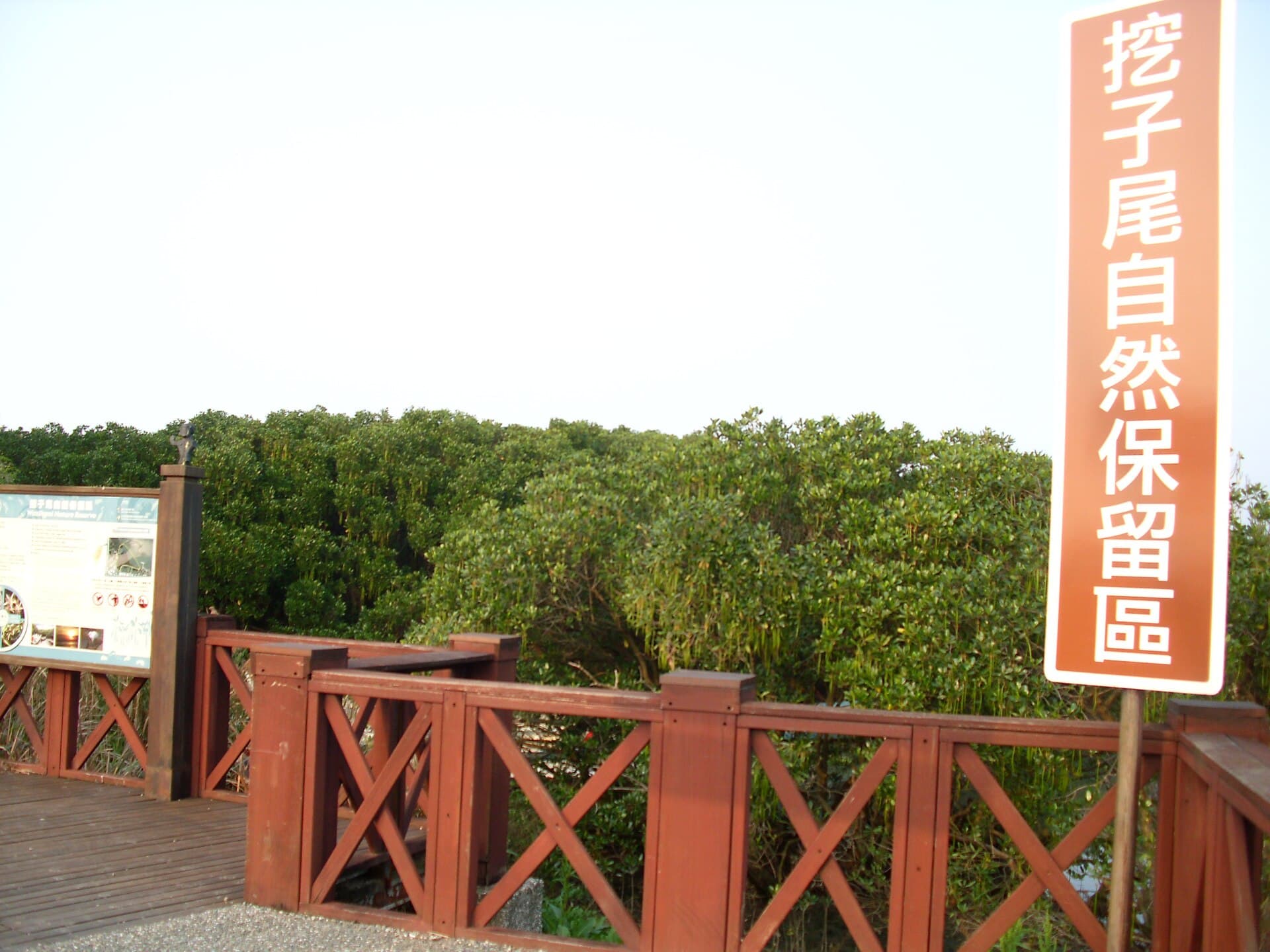
Mangrove Nature Reserve
Stretching from Zhuwei to Ganzhen, this 76-hectare pure Kandelia obovata forest represents the northernmost distribution limit for Kandelia obovata and is the largest of its kind in the world. Mangrove plants are named f…
Visitor Essentials
Stretching from Zhuwei to Ganzhen, this 76-hectare pure Kandelia obovata forest represents the northernmost distribution limit for Kandelia obovata and is the largest of its kind in the world. Mangrove plants are named for the reddish color of their bark and wood, and they primarily grow in estuaries and coastal areas of tropical and subtropical regions. All mangroves in this area belong to the Kandelia obovata species, which is a viviparous evergreen tree. The term 'Shuibizai' (水筆仔, literally 'water brushlet') is derived from its viviparous seedlings resembling a penholder. After exiting MRT Hongshulin Station, follow Lane 50 of Waiganzenlin (Outer Ganzhenlin) to reach the mangrove swamp area. Fiddler crabs, mudskippers, and other creatures are active within the park. From mid-September to mid-March each year, egrets, sandpipers, and other waterfowl can also be seen. It can truly be described as a rich and convenient natural ecological classroom.
Discover the Context
No stories linked yet.
Happening at Mangrove Nature Reserve
View CalendarNo upcoming events at this venue.