Mengxia Dizang Temple
Mengxia Dizang Temple, commonly known as Mengxia Dizangwang Temple, primarily enshrines Ksitigarbha Bodhisattva. It is a Grade 3 historic monument in Taiwan, located on Xichang Street in Wanhua District, Taipei City. The…
Visitor Essentials
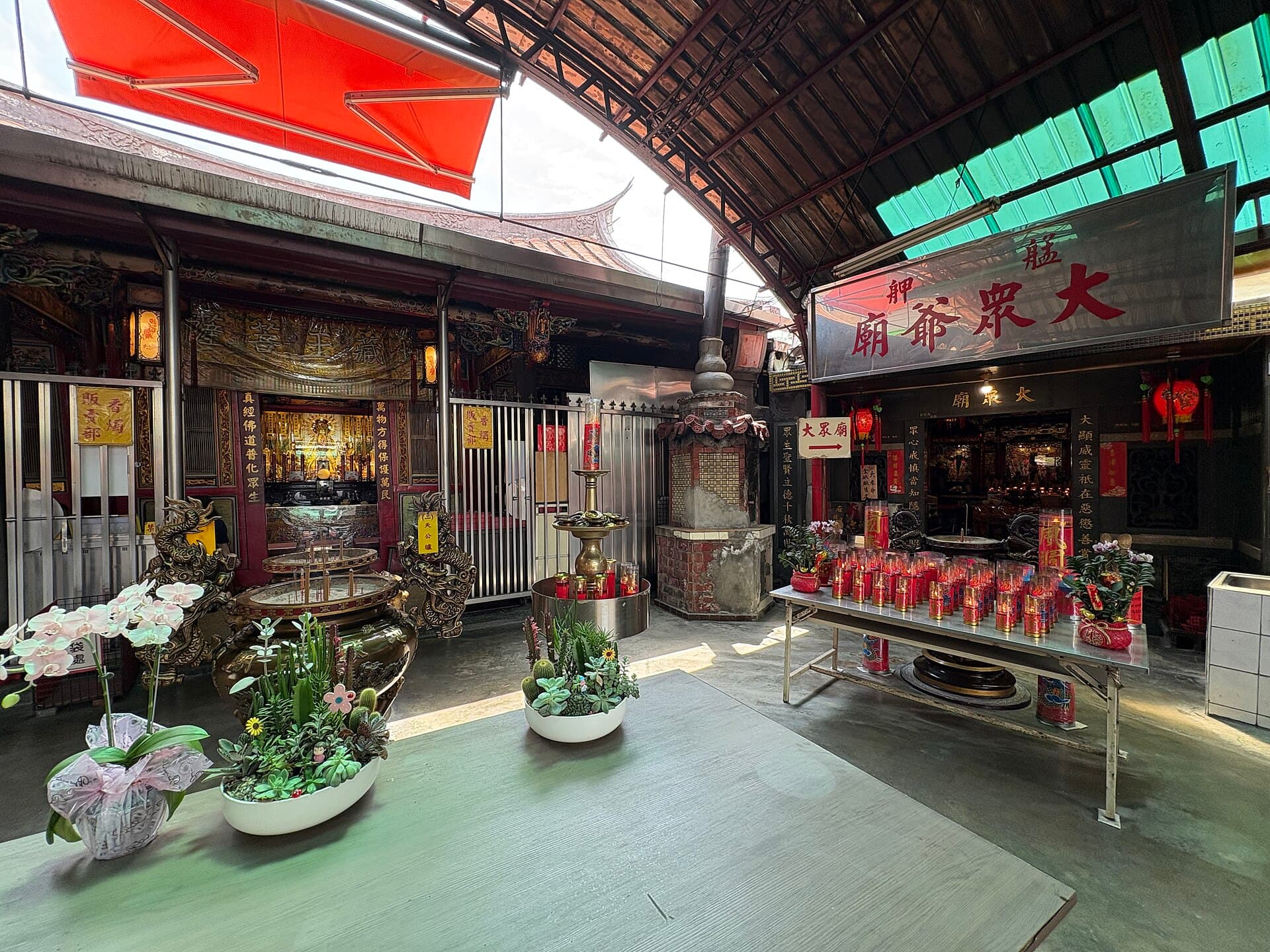
Mengxia Dizang Temple, commonly known as Mengxia Dizangwang Temple, primarily enshrines Ksitigarbha Bodhisattva. It is a Grade 3 historic monument in Taiwan, located on Xichang Street in Wanhua District, Taipei City. The temple was built in the 25th year of Emperor Qianlong's reign (1760 AD) during the Qing Dynasty and underwent renovation in the 18th year of Emperor Daoguang's reign (1838 AD). Originally private property, its management rights were transferred to Longshan Temple during the Japanese occupation to prevent government confiscation. Dizangwang Temple faces west, sitting on an east-west axis, and to this day retains the architectural style of a single-hall temple from the mid-Qing Dynasty. The structure is simple, and the carvings are rustic. It is a single-hall building with a three-bay facade. The roof features a swallowtail ridge and herringbone gables. The entrance is a porch with a rolled canopy roof. The column bases are round. The main timber structure inside the hall employs a lifting beam system with two principal transverse beams and three short columns, with a lamp beam spanning between the principal transverse beams for hanging lanterns. Besides the primary deity Ksitigarbha Bodhisattva, Mengxia Dizang Temple also enshrines Emperor of the North Pole (Beiji Dadi) to its left, and the City God of the Prefecture (Fu Chenghuangye) and Marshal Tiandu to its right. Generals Fan and Xie are enshrined on the left and right sides. The original Fucheng隍 Temple was located within Taipei City walls and was destroyed during the Japanese occupation, after which the City God of the Prefecture was moved and enshrined in this temple. Marshal Tiandu was originally enshrined in Zilai Palace on Xiyuan Road, but after that temple was destroyed, he was also moved here. Every year on the 30th day of the 7th lunar month, Ksitigarbha Bodhisattva's birthday, a large Pudu (universal salvation) celebration ritual is held. The offering table features an ancient and rustic incense burner from the 25th year of Guangxu's reign (1899), inscribed with "Autumn auspiciousness of the Jihai year of Guangxu." The "Dizangwang Temple" plaque above the main deity's altar was established in the 8th year of Guangxu's reign (1882). The ancient incense burners on the offering tables of Generals Fan and Xie, who are enshrined to the left and right of the main deity, were established in the 34th year of Meiji (1901) during the Japanese era. Next to the temple is a Dazhong Temple, which primarily enshrines Dazhongye, referring to unowned spirits or deceased souls. Most of these were early immigrants who came to Taiwan for pioneering and unfortunately lost their lives. This temple was also built in the 25th year of Qianlong (1760), indicating a close historical relationship between the two temples.
Discover the Context
No stories linked yet.
Happening at Mengxia Dizang Temple
View CalendarNo upcoming events at this venue.