Wuzhi Mountain Range_Jinmian Mountain Nature Trail
Jinmian Mountain is the southwestern ridge of the Wuzhi Mountain Range, divided into Jinmian Mountain and Xiao Jinmian Mountain (Little Jinmian Mountain). The mountain's andesite sandstone contains quartz, so when the su…
Visitor Essentials
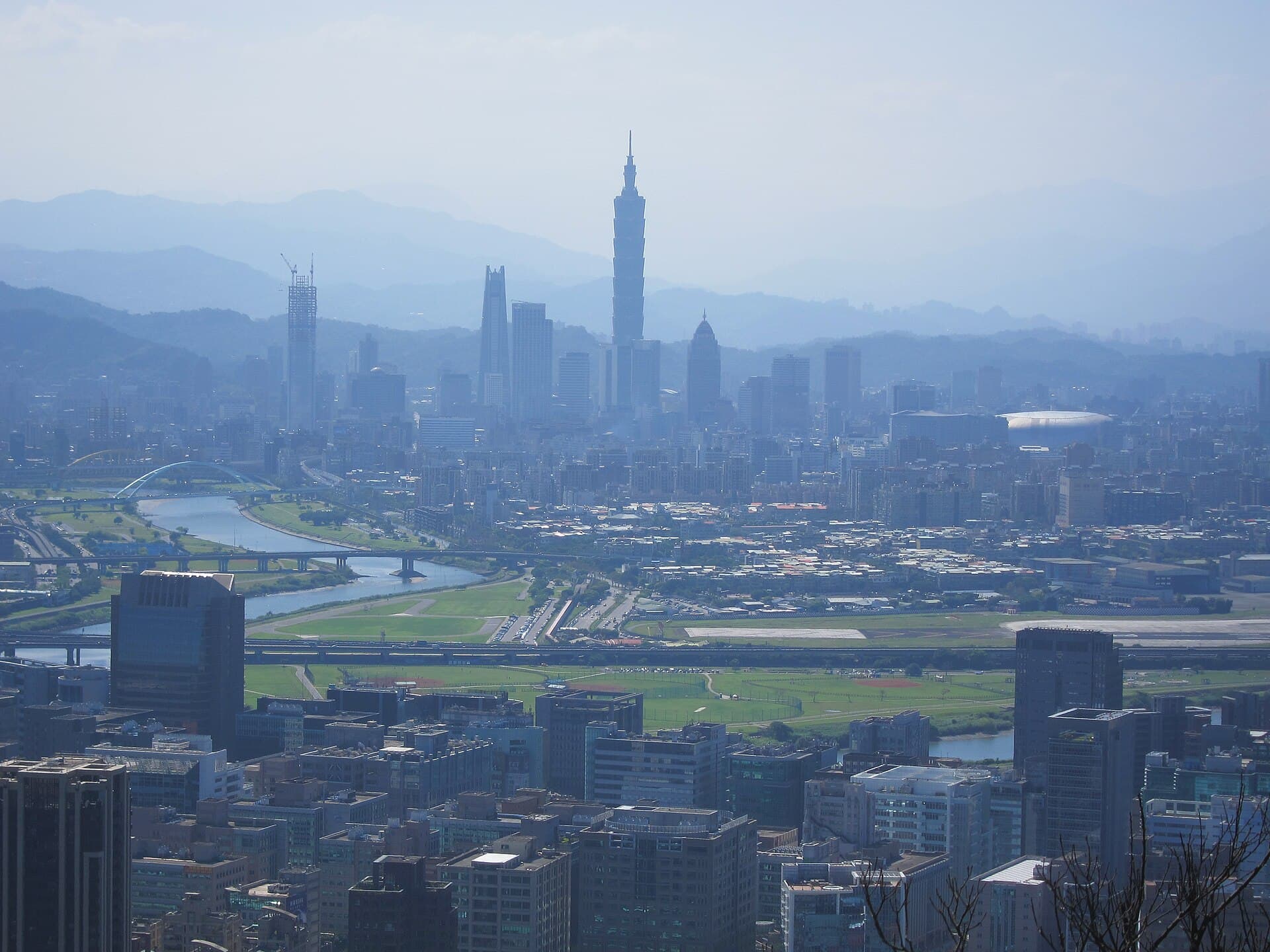
Jinmian Mountain is the southwestern ridge of the Wuzhi Mountain Range, divided into Jinmian Mountain and Xiao Jinmian Mountain (Little Jinmian Mountain). The mountain's andesite sandstone contains quartz, so when the sun shines on it, the distant peak sparkles, leading locals to call it Jinmian Mountain. The hiking trail is approximately 2.3 kilometers long, with the entire route spanning about 3 kilometers, taking approximately 1 hour and 40 minutes to walk. The Jinmian Mountain Nature Trail is located next to Takming University of Science and Technology on Huanshan Road in Neihu. From the starting point, hikers are greeted by nearly vertical large rock faces. Along the way, there are rustic sandstone steps, but as the slope gradually increases, these steps give way to large rock faces, some over 100 meters in diameter. Halfway up the mountain, there's a stone fortress observation deck, a remnant of a Qing Dynasty quarry, which serves as a prominent landmark. Among the giant rocks at the summit, there's an excellent vantage point to overlook the Taipei cityscape and the Keelung River banks. Continuing east along the trail, shortly after passing Xiao Jinmian Mountain, the trail reaches the vicinity of Jinlong Temple on Neihu Road Section 3, marking the final section of the nature trail. Jinmian Mountain, also known as Jiandao Stone Mountain (Scissors Stone Mountain), is located west of Jinlong Industrial Road in Neihu. When viewed from Bieshan Temple, the giant rocks at the summit resemble a sharp bird's beak, hence its alternative name. Despite its elevation of only 258 meters, it possesses the imposing presence of a high mountain. The valley was once a significant source of stone used for constructing Taipei City during the Qing Dynasty. Giant rocks are scattered, undulating and standing majestically side by side. Traces of quarrying remain today. From the summit, one can overlook Neihu Dapi (Neihu Great Pond) and the Taipei cityscape, enjoying a vast and beautiful vista. The Qing Dynasty Quarry Remains: The seemingly unremarkable, even dilapidated, sheltered rest area on the mountainside trail is not only a designated city historical site but also a witness to the construction of Taipei City. During the Guangxu era of the Qing Dynasty, most of the stone for Taipei Prefecture's city walls was sourced from the quartz sandstone found here. The quarrying area extended from Jinmian Mountain eastward to Xiao Jinmian Mountain. Today, alongside the shelter, one can still see chisel marks and neatly cut, scattered stone blocks, marking the location of the quarry remains. Imposing and Towering Above Other Peaks: If you find suburban Taipei hiking trails uninteresting, lacking in difficulty or challenge, it's because you haven't visited Jinmian Mountain, which possesses the grandeur of a high mountain. Upon entering the trailhead, steep, almost vertical rock faces majestically rise above the stream, an imposing presence unlike other suburban mountains. The rustic sandstone steps along the way are wide enough for only one person, and before long, large rock formations appear on both sides of the path. As the slope gradually ascends, the stone steps disappear, replaced by massive rock faces, some over a hundred meters in diameter. The previously upright giant rocks flanking the path now take center stage, abruptly blocking the way forward. Whether you want to demonstrate your climbing skills or test your courage, stamina, and willpower, you must navigate this natural 'gym' before reaching the summit. After passing nature's test, take a short break at the 'Lunjiantian Pavilion' (Debate Sword Pavilion), adorned with scenic photos, before the final ascent. At a fork in the road, turn right, and soon you'll reach the summit, entering the domain of Jiandao Stone. Jinmian Mountain also bears the moniker 'Jiandao Stone Mountain' because, when viewed from the direction of Bieshan Temple in Neihu, the giant rocks at its summit resemble a sharp bird's beak. Here, massive boulders are scattered and undulating, creating a magnificent and imposing scene. Some stand majestically side by side, while others rise like pillars supporting the sky. The accumulated giant rocks atop the mountain form a rare and spectacular sight. Enjoying 360-Degree Stunning Scenery: Visiting Jiandao Stone is the highlight of a trip to Jinmian Mountain. Besides admiring the unique landscape, it offers a superb panoramic view. Halfway up the mountain, the Qing Dynasty quarry and the stone fortress observation deck are good spots to overlook the Taipei Basin, with the Keelung River area being the clearest. Among the giant rocks at the summit, a breathtaking 360-degree panorama surrounds you: to the east, gaze upon Neihu Dapi (Bihu Park); to the north, overlook the hills near Bieshan Temple and Wuzhi Mountain; to the south, take in the Taipei cityscape, including the Keelung River, Songshan Airport, Miramar Ferris Wheel, and Taipei 101. To the west, enjoy views of the Taipei Basin and the Keelung River. From the summit, the urban scenery of Taipei City is fully visible, making it an excellent spot for high-altitude observation. At this point, find a giant rock perched precariously on a cliff, enjoy the exhilaration of spreading your arms to the wind, or lie down on it to freely release the tension from your climb. If a few friends sit together in this open space, chatting freely, the experience is incomparable to having afternoon tea in a city corner. Easy Ecological Observation Walk: Just after leaving the Jiandao Stone area, another marvelous sight awaits: under the sunlight, the ground sparkles. Although you're walking on a snow-white sandstone ridge, it feels as if you're walking along a coastline. This is because the andesite sandstone in this area contains quartz. Early locals, looking up at the mountain, were amazed by the glittering light from the summit, and thus named it 'Jinmian Mountain'. In an environment dominated by massive rocks, the soil is likely not fertile. Coupled with the dry climate and the impact of prevailing winds, plants that can thrive here must be 'hardy and resilient'. Growing on the ridge are wind- and drought-resistant plants such as common myrtle, bitter-leaf soapberry, fine-leaf bunya nut, and Nanling yaohua. Near the quarry, white-haired stinkwort and tallow trees grow in clusters, and a considerable number of acacia trees can also be seen on Jinmian Mountain. The 'Bailiu Ping' (Tallow Tree Platform), a platform on the trail where one can first overlook the Neihu area and the Keelung River, features not only the prominent tallow trees but also a rare thorny-leaf cherry laurel, found only north of the Keelung River. Along the way from the trailhead to the summit, tree species that in other forests can only be gazed at from afar, due to their smaller stature here, become very approachable, making close observation much easier. There are several pavilions along the way, ensuring plenty of spots to rest while conducting ecological observations.
Discover the Context
No stories linked yet.
Happening at Wuzhi Mountain Range_Jinmian Mountain Nature Trail
View CalendarNo upcoming events at this venue.