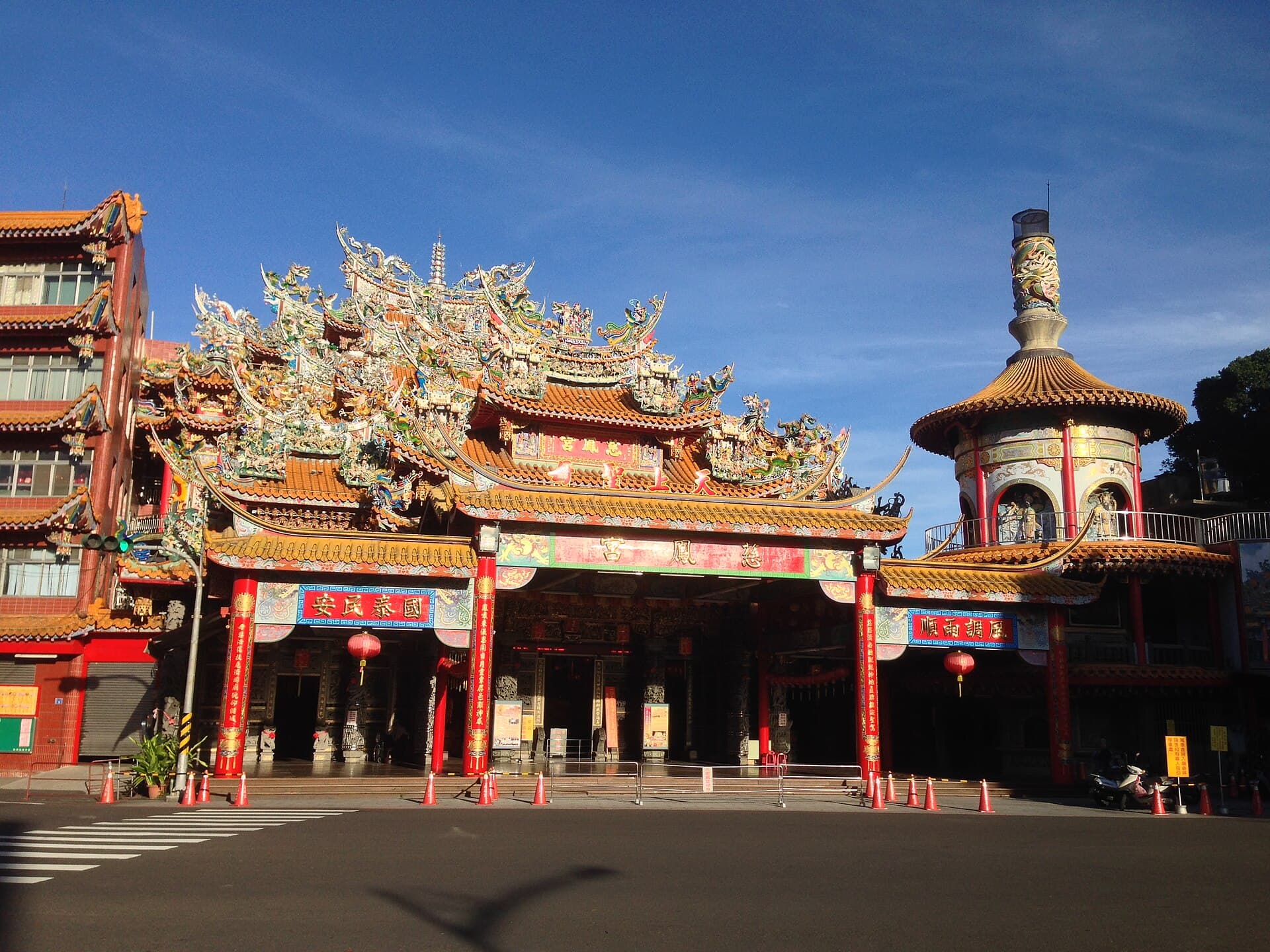
Cihfeng Temple
During the Yongli reign of the Ming Dynasty, a Buddhist monk who worshipped Mazu (Goddess of the Sea) traveled across the sea from Fujian to A-hou (present-day Pingtung City). Initially, he temporarily placed Mazu's stat…
Visitor Essentials
During the Yongli reign of the Ming Dynasty, a Buddhist monk who worshipped Mazu (Goddess of the Sea) traveled across the sea from Fujian to A-hou (present-day Pingtung City). Initially, he temporarily placed Mazu's statue in the local government office for devout worship. However, inexplicably, a flickering red light would appear every midnight. At first, people couldn't understand the meaning of the red light, but after some time, they finally realized this was a manifestation of Mazu's divine power. Thus, they convened to discuss building a temple for her enshrinement. This was the underlying reason for the construction of Cihfeng Temple in 1737 (the 2nd year of Emperor Qianlong's reign, Qing Dynasty), and a miracle story long recounted among devotees. For over two centuries since its establishment, Cihfeng Temple experienced its most severe fire in 1983 (the 72nd year of the Republic of China). The fire, caused by an electrical short circuit, almost completely destroyed both the front and rear halls. However, to the relief and amazement of devotees, the deities enshrined within the temple remained completely unharmed. Following this devastating fire, a large-scale reconstruction project lasting fifteen years was immediately initiated, which transformed Cihfeng Temple into its present appearance. On the roof above the "Cihfeng Temple" plaque, one can immediately spot the magnificent Koji pottery (jiǎnnián) art, featuring lifelike Koji pottery figures and various dragon and beast motifs. The caisson ceiling above the main hall is formed by layers of golden-painted *dougong* (bracket sets), which is not only resplendent but also exceptionally grand. The temple also houses numerous historical artifacts over a century old, such as the intricately carved stone drums and coiled dragon pillars in the main hall, the plaques hanging in the halls, and the stone steles recording historical events, all dating back to the Qing Dynasty. After its reconstruction, Cihfeng Temple not only boasts a splendid temple complex but also employs creative thinking to organize numerous cultural activities, allowing people to rediscover the essence of traditional religion. Examples include the A-hou Mazu Cultural Festival, the pilgrimage procession (Huixiang Shenjia Raoding), and the Eight Generals (Bajiajiang) and official generals' (Guanjiangshou) competitions. These activities not only promote religious values but also distill deeper cultural connotations.
Discover the Context
No stories linked yet.
Happening at Cihfeng Temple
View CalendarNo upcoming events at this venue.