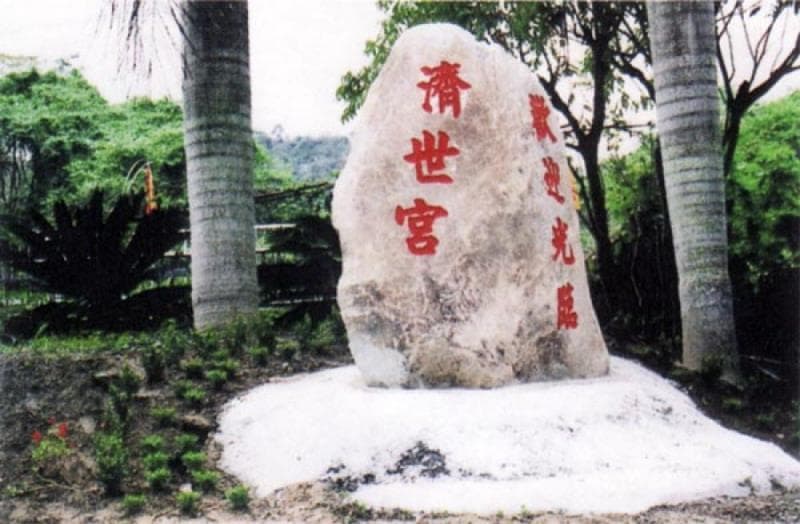
Jishi Temple
The origin of this temple dates back to an earlier temple, "Tongshan Temple," located in the former "Paazi Gang" area, originally dedicated to Guanyin Bodhisattva. In 1928 (the 17th year of the Republic of China), a loca…
Visitor Essentials
每日開放
The origin of this temple dates back to an earlier temple, "Tongshan Temple," located in the former "Paazi Gang" area, originally dedicated to Guanyin Bodhisattva. In 1928 (the 17th year of the Republic of China), a local devotee named Huang A-Hai began practicing spirit-writing and mediumship. He subsequently enshrined three divine masters—Guan Sheng Di Jun, Fu You Di Jun, and Siming Zhen Jun—within Tongshan Temple. Mr. Huang then commenced spirit mediumship sessions there, offering guidance and solace to the public. Over time, the temple became a renowned sanctuary where believers sought answers, remedies for illnesses, and spiritual comfort, known for its profound responsiveness and efficacy. In 1935 (the 24th year of the Republic of China), Tongshan Temple was tragically destroyed by the Great Taiwan Earthquake. Faced with widespread disaster and concern for the deities' refuge, villagers temporarily enshrined the sacred Guanyin statue in a makeshift tent. The three divine masters, including Guan Sheng Di Jun, were respectfully moved to Huang A-Hai's private residence, ensuring their continued mission of helping and enlightening the community. Subsequently, the three divine masters permanently resided at Mr. Huang's home, where a dedicated spirit-writing hall was established. This hall became a place where their divine power was profoundly manifested to protect the local community. Guan Sheng Di Jun himself bestowed the name "Jishi" (meaning 'Helping the World') upon the hall, underscoring its ultimate purpose: to bring peace, alleviate disasters, and resolve misfortunes for the people.
Discover the Context
No stories linked yet.
Happening at Jishi Temple
View CalendarNo upcoming events at this venue.