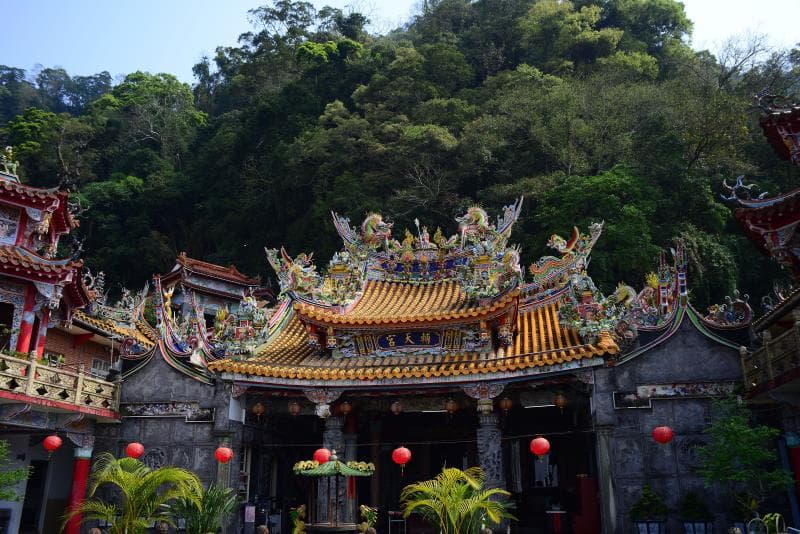
Quanhua Temple, Shitoushan
Quanhua Temple was built in 1897, nestled on the front slope of Shitoushan (Lion's Head Mountain). Among the temples on Shitoushan, Quanhua Temple is the largest in scale and the most magnificent in appearance. The main…
Visitor Essentials
每日開放
Quanhua Temple was built in 1897, nestled on the front slope of Shitoushan (Lion's Head Mountain). Among the temples on Shitoushan, Quanhua Temple is the largest in scale and the most magnificent in appearance. The main hall was constructed utilizing existing natural rock caves, with parts of the temple structure embedded within the caves. Quanhua Temple boasts a splendid exterior, while its interior features decorations such as stone carvings, wood carvings, and paintings that are both rustic and delicate, preserving a rich and diverse collection of traditional art. The pair of dragon pillars on the corridor eaves are hand-carved; the right dragon holds a pearl in its mouth, while the left dragon does not. It is said that different master carvers were responsible for each pillar and dragon. Their forms are robust yet ancient and rustic, with graceful and flowing lines. The openwork octagonal stone windows on the front eave walls on both sides of Quanhua Temple's main hall are carved with qilins, featuring simple lines and sturdy forms, possessing a profound rustic beauty. The octagonal cast-iron windows in the wing rooms are elegantly designed. The coiling dragon carving on the imperial pathway stone, clinging to the ground, is lifelike. All these are rare and exquisite masterpieces, well worth a detailed look. Ziyang Gate, the main entrance to Shitoushan, is the most important historical site on the mountain and a necessary path for visitors exploring the front mountain. It is a freestanding gate tower with a passage, featuring a double-eaved hip-and-gable roof, an imposing and magnificent structure, guarded by two colossal stone lions. Ziyang Gate is built with a mixed structure of brick, tile, earth, and stone, while the dougong (bracket sets) on the gate are primarily wooden. On the brick and stone archway facade, artisans divided it into several sections, each called a "du." The names of these sections, from bottom to top, are in order: "pedestal," "skirt panel," "waist panel," "body panel," "top panel," and "waterwheel panel." The "pedestal" is at the lowest layer, carved in the shape of a low counter, where artisans skillfully arranged floral patterns. Next, the "skirt panel" features linear carvings of combined floral, bird, and beast motifs. The "waist panel" displays embossed floral patterns. The most exquisite carvings are found on the two "body panels" on the left and right, characterized by their simple forms and soft lines. From Quanhua Temple, one can gaze into the distance at the continuous, overlapping mountain ranges and verdant, clear peaks forming a magnificent vista. This place also offers basic accommodations for visitors.
Discover the Context
No stories linked yet.
Happening at Quanhua Temple, Shitoushan
View CalendarNo upcoming events at this venue.