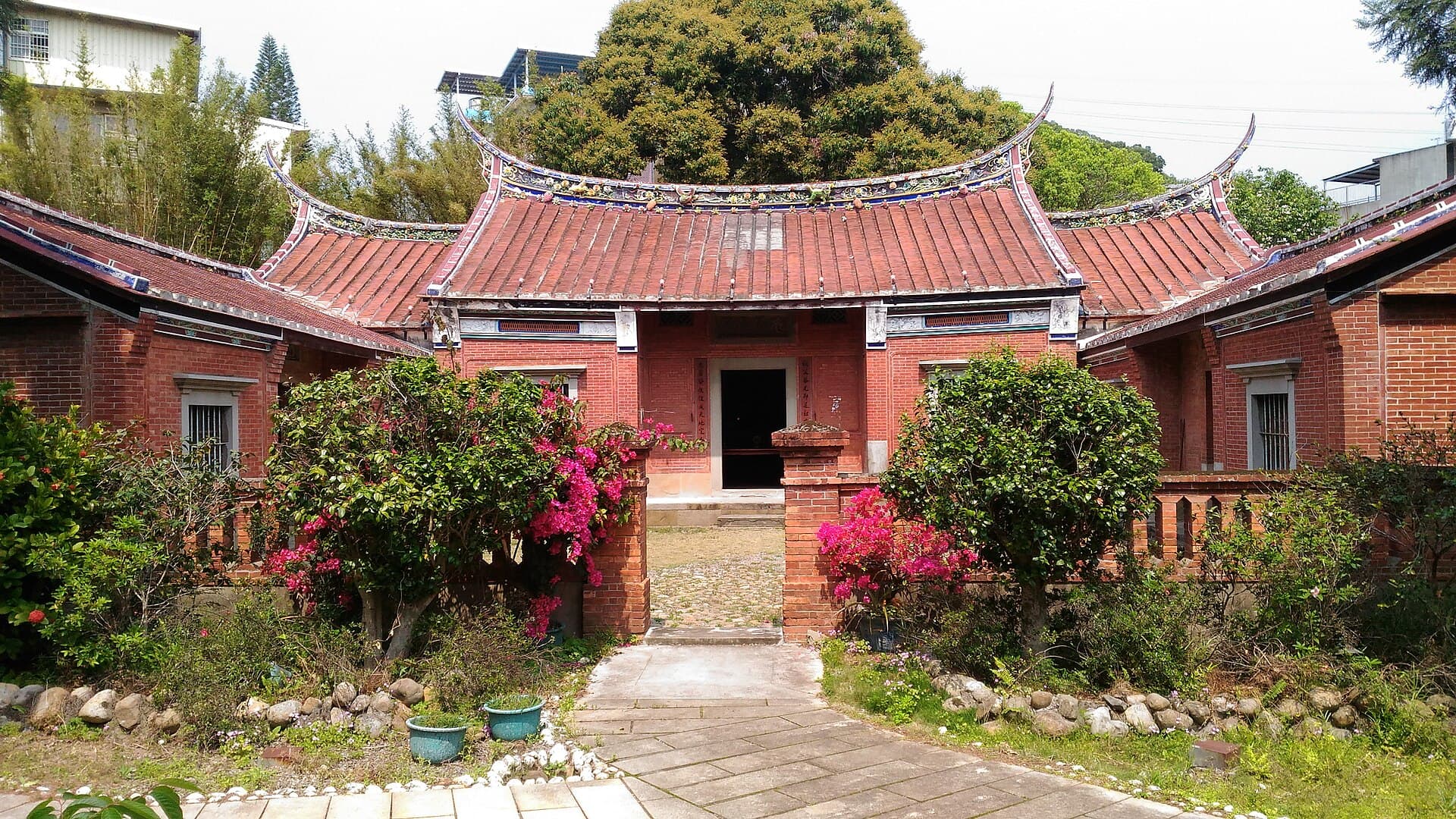
Guanxi Zheng Family Ancestral Hall
Guanxi is located northeast of Hsinchu City and is an important town in the upper reaches of the Fengshan River. Before Han Chinese settlers arrived in the early Qing Dynasty, this area was home to the Pingpu tribe's Zhu…
Visitor Essentials
Guanxi is located northeast of Hsinchu City and is an important town in the upper reaches of the Fengshan River. Before Han Chinese settlers arrived in the early Qing Dynasty, this area was home to the Pingpu tribe's Zhukeng community. Han Chinese settlement began around the Jiaqing and Daoguang periods, generally moving upstream along the Fengshan River from the Hsinchu plain. Guanxi was a crucial gateway to the inner mountains, leading to the establishment of a defensive pass. The Guanxi town streets include Old Street and New Street. Old Street was first built in the 17th year of Jiaqing (1812), and New Street, also known as Xiancaibang, was established in the 2nd year of Daoguang (1822). The Zheng family of Guanxi originated from Raoping, Guangdong, and came to Taiwan to settle. Initially, the sixth-generation ancestor, Zheng Qingya, arrived in Taiwan in his early twenties and settled near Qiaotou at the foot of Jianshan in Yingge, Taipei. By the late Qianlong period, the ninth-generation ancestor, Zheng Chengliu, moved to Toucheng, Lanyang, where he operated a goldsmith's shop and developed Erjie, Sanjie, and Sijie, accumulating some wealth. Later, fearing involvement in the Fujian-Guangdong clan feuds, they relocated again in the 14th year of Daoguang (1834) to Xiancaiweng in Zhubei Second Fort, Tamsui Sub-prefecture (present-day near Guanxi Beimenkou), to engage in land reclamation. In addition to purchasing fields and houses, the Zheng Family's Xingyang Ancestral Hall was also built around this time. Legend has it that when it was first built, the geomancer suggested a 'Chou-shan Jian Gen' orientation (slightly north-facing), believed to bring prosperity and good fortune. However, the family decided to adopt a 'Gen-shan Jian Chou' orientation (facing southwest from the northeast), believed to promote scholarly success. This shows the Zheng family's emphasis on the imperial examination system and their dedication to educating their descendants. Both the Zheng Family Ancestral Hall and the Luo Family Temple are located near Beimenkou on higher ground. In early years, they offered panoramic views of Guanxi's town streets and distant views of the river valley and mountains opposite, benefiting from the principle of 'embracing yang while leaning against yin,' fully reflecting ancient Feng Shui beliefs. The Zheng Family Ancestral Hall is a typical sanheyuan (three-sided courtyard compound), which Hakka people refer to as a 'main hall with left and right wing houses.' Behind the ancestral hall is an earthen mound, known as a 'huatai' in Hakka architecture, with a thriving lychee tree at its center. Behind the ancestral hall, a retaining wall built from pebbles in the shape of a circular backrest can be seen, a common technique in Hakka regions. In ancient times, ancestral halls or family temples, in addition to their function of ancestor worship, were in fact similar to temples, serving multiple functions including education, culture, and public activities. For the basic education of children, the ancestral hall could double as a private school; for local clan celebrations and festive occasions, it could serve as an activity venue; and disputes over rights and interests among clan members were also resolved in the ancestral hall. Some larger ancestral halls even had attached performance stages, regularly inviting opera troupes to perform in thanksgiving to the gods and respect for ancestors, creating a warm atmosphere for family gatherings.
Discover the Context
No stories linked yet.
Happening at Guanxi Zheng Family Ancestral Hall
View CalendarNo upcoming events at this venue.