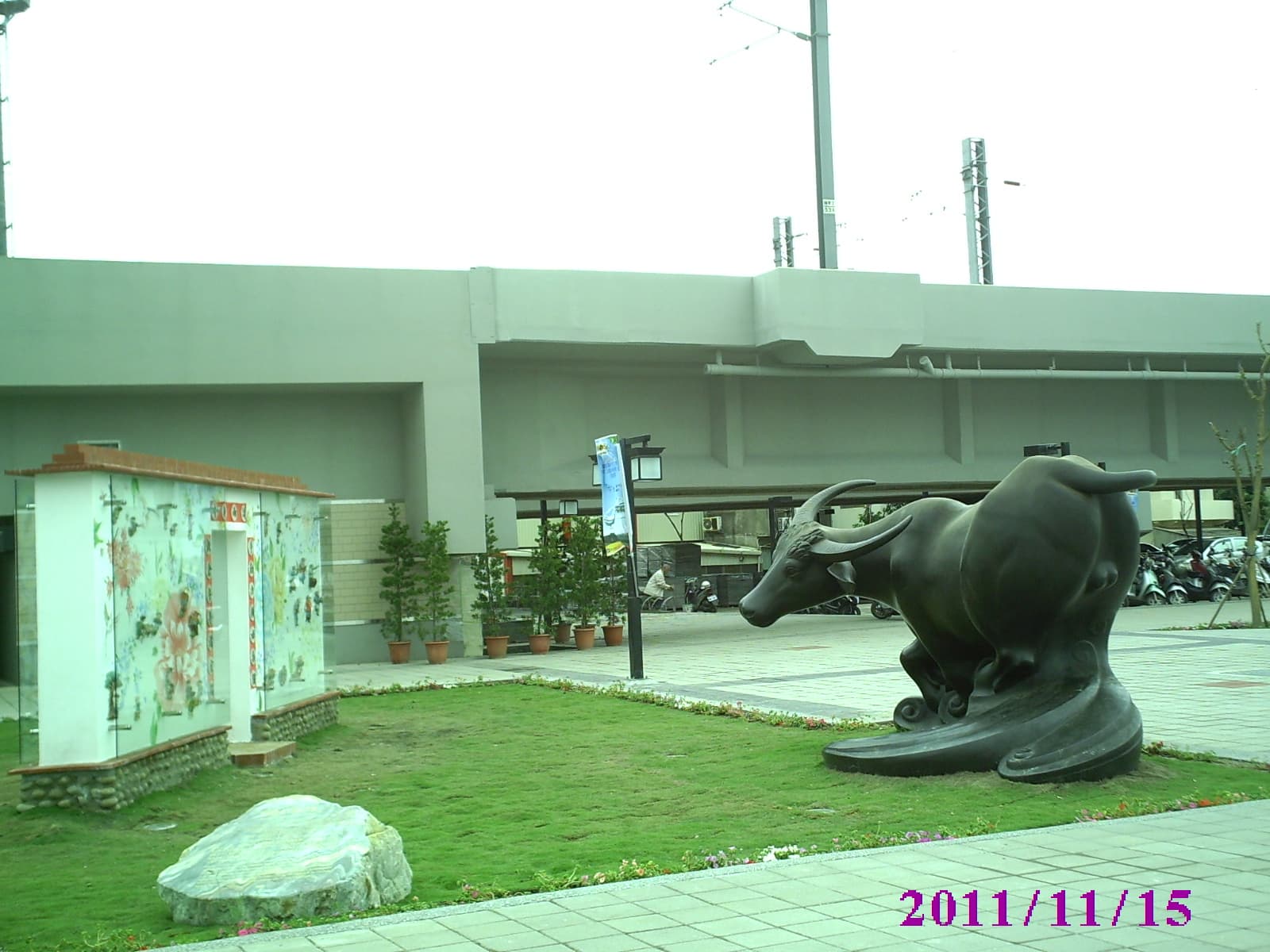
The Two Zhudong Touchong Steles of 'Agreement and Joint Prohibition' and 'Prohibition by Imperial Edict'
The 'Agreement and Joint Prohibition Stele' and the 'Imperial Edict of Prohibition Stele' in Touchong, Zhudong, erected in the second year of the Xianfeng reign of the Qing dynasty (1852), bear inscriptions that are stil…
Visitor Essentials
The 'Agreement and Joint Prohibition Stele' and the 'Imperial Edict of Prohibition Stele' in Touchong, Zhudong, erected in the second year of the Xianfeng reign of the Qing dynasty (1852), bear inscriptions that are still clearly visible today, narrating the history of public deliberation on land and reclamation in the Zhudong area during the Qing dynasty. Specifically, the proclamation for the 'Imperial Edict of Prohibition Stele' was issued by Zhang Qixuan, the Tongzhi (Assistant Prefect) of Tamsui. The top corners of the stele are cut, and the four characters '奉憲示禁' (Imperial Edict of Prohibition) are carved on it. The inscription records that Chen Quanyuan and other shopkeepers from Zhujian City jointly purchased the 'Yuanshuanpu land' during the Qianlong era (1777) for joint reclamation. As time passed, disputes arose over illegal occupation of the land. After new public deliberation, a portion of the land was designated as a common grazing area for cattle and a cemetery for the poor. After official investigation confirmed the facts, this stele was specially erected to warn the public, prohibiting any opportunistic encroachment; violators would be punished according to the law. The end of the inscription includes a contract from the 42nd year of Qianlong (1777), which records that Ding Laowen, the interpreter of the Zhujian community, Shibang, the indigenous headman, and others, sold tribal land to Lin Qintang, Zeng Rihui, and others. The 'Agreement and Joint Prohibition Stele' records the same event as the 'Imperial Edict of Prohibition Stele,' primarily serving as a contractual document. Its stele top also has cut corners, with '申約併禁碑' (Agreement and Joint Prohibition Stele) carved on it. The inscription states that the land was originally used as a cattle ranch, and that people contributed 150 yuan to purchase the land. The signatories included 23 original owners and 30 successor owners. The contract clearly stipulated that the land was for public use and could not be encroached upon without authorization. The inscription also includes the reason for erecting the stele, emphasizing that moral constraints should be observed and ancestral graves should not be damaged. Violators would be fined twelve silver dollars, to be deposited in the Fudeiye Temple for incense and worship expenses. A list of sponsors for the stele's erection is also carved on it, reflecting the spirit of mutual assistance in society at that time. These two steles are not only exquisitely carved but also have complete bases. The inscriptions meticulously record the reclamation history of the Zhudong area from the 18th to 19th centuries, revealing the interactions between the Taokas people of the Zhujian community and Han Chinese immigrants. The inscriptions document the process of land transactions, public deliberation, and official intervention, embodying the land management model of the Qing dynasty and also reflecting the social relations between the Lin family of Zhubei and local communities at that time. These steles were once covered in dust for decades, but are now rediscovered, becoming a precious historical and cultural heritage of the Zhudong area.
Discover the Context
No stories linked yet.
Happening at The Two Zhudong Touchong Steles of 'Agreement and Joint Prohibition' and 'Prohibition by Imperial Edict'
View CalendarNo upcoming events at this venue.