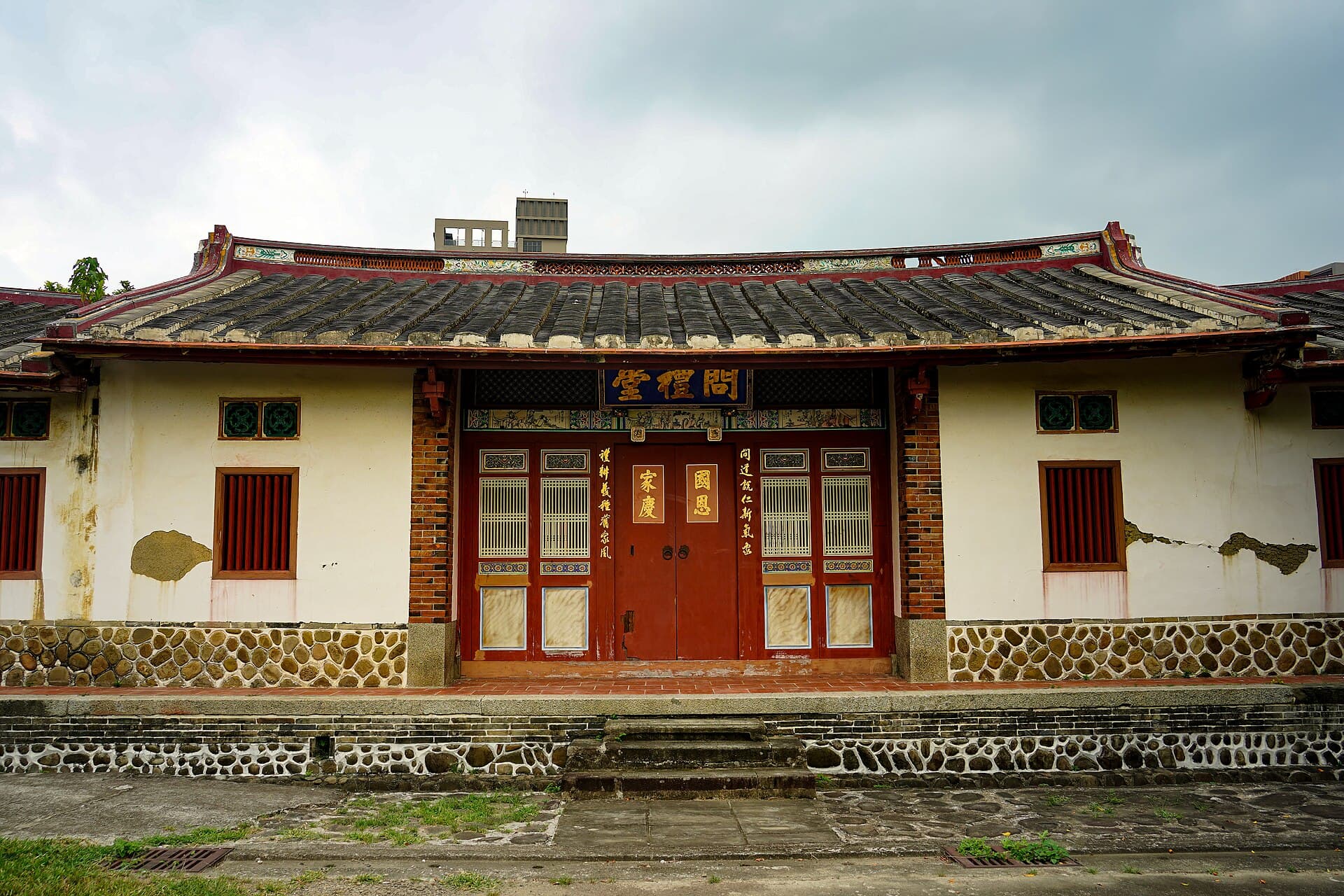
Zhubei Wenli Hall
Zhubei Liujia was formerly known as Liuzhangli. Its name originated from the area of cultivated land, where five jia (a unit of land) was counted as one "li" (plow), meaning a place with thirty jia of cultivated land. Th…
Visitor Essentials
Zhubei Liujia was formerly known as Liuzhangli. Its name originated from the area of cultivated land, where five jia (a unit of land) was counted as one "li" (plow), meaning a place with thirty jia of cultivated land. Thus, it was called Liuzhangli, and in the 9th year of Taisho (1920), it was renamed Liujia. Before the Han Chinese settled here, the area was known as "Wulunmaomao Huangpu" (Misty Hills and Hairy Wasteland). In the 2nd year of Qianlong (1737), the Zhou family from Jinjiang, Quanzhou, came to cultivate this land. In the 14th year of Qianlong (1749), the Pingpu people of the Zhujian community also moved to this wasteland and established the Dongxing community. By the 17th year of Qianlong (1752), Raoping natives Lin Qintang, Lin Sunzhang, leading Lin Juzhen, and Lin Xiankun moved from Lukang to cultivate Liuzhangli. They built the Liuzhangli Canal and extensively reclaimed land. Later, they returned to their hometown to invite Lin Sunfu and Lin Suntan to settle, establishing Shanqing Hall and laying the foundation for the Lin family of Zhubei Liujia. Lin Xiankun, with his talent and diligence, united his clan's strength to manage the development of Liujia, quickly rising from a tenant farmer to a small landlord. Due to his dedication to public welfare, his social status grew. During Lin Shuangwen's rebellion, Lin Xiankun rallied local villagers to form a militia (Yiminjun) to defend their homeland and assisted the Qing army in quelling the rebellion. Consequently, he was awarded the "Baoshong" (Commendation for Loyalty) plaque and military honors by the Qing court. Lin Xiankun's third son, Lin Guobao, also followed in his father's footsteps. During the reconstruction of Zhujian City, he contributed significantly in money and effort. During the Jiaqing era, he gained the title of Jiansheng (Imperial College student) by donating to the government. Later, he, along with his grandfather Lord Hengshan and his father Lord Xiankun, were posthumously granted the title of "Fengzhi Daifu" (Grand Master of Admonition), adding considerable honor and prestige to the Lin family. Wenli Hall was built in the 12th year of Daoguang (1832). Its construction was initiated in the 11th year of Daoguang (1831) when Lin Shengbao (also known as Qiuhua), son of Lin Guobao, passed the provincial military examination (Wujuren). Therefore, the following year, a site was chosen to build Wenli Hall, and a flagpole was erected to glorify the family's prestige. Upon completion, it was referred to as the "North and South Twin Halls" along with Daifu Di, serving as the Lin family's ancestral hall and council chamber. After Lin Qiuhua became a Wujuren, he made outstanding contributions to local development. In the 13th year of Daoguang (1833), he raised funds to establish passes and open up areas like Jiuhonglin and Sanchongpu. After the mid-Daoguang period, he also pioneered cultivation in Kavalang (now Yilan), acquiring hundreds of jia of land. His descendants all developed in Yilan, and there are also residences in the area with the hall name Wenli Hall, all belonging to descendants of the Lin family.
Discover the Context
No stories linked yet.
Happening at Zhubei Wenli Hall
View CalendarNo upcoming events at this venue.