Xinpu Baozhong Temple of the Loyal Martyrs
Yimin Temple faces south, built against a mountain on what was later known as the Dianzihu Terrace, overlooking the Fengshan River Valley Plain. With a lower front and higher back, and embracing terrain on both sides, it…
Visitor Essentials
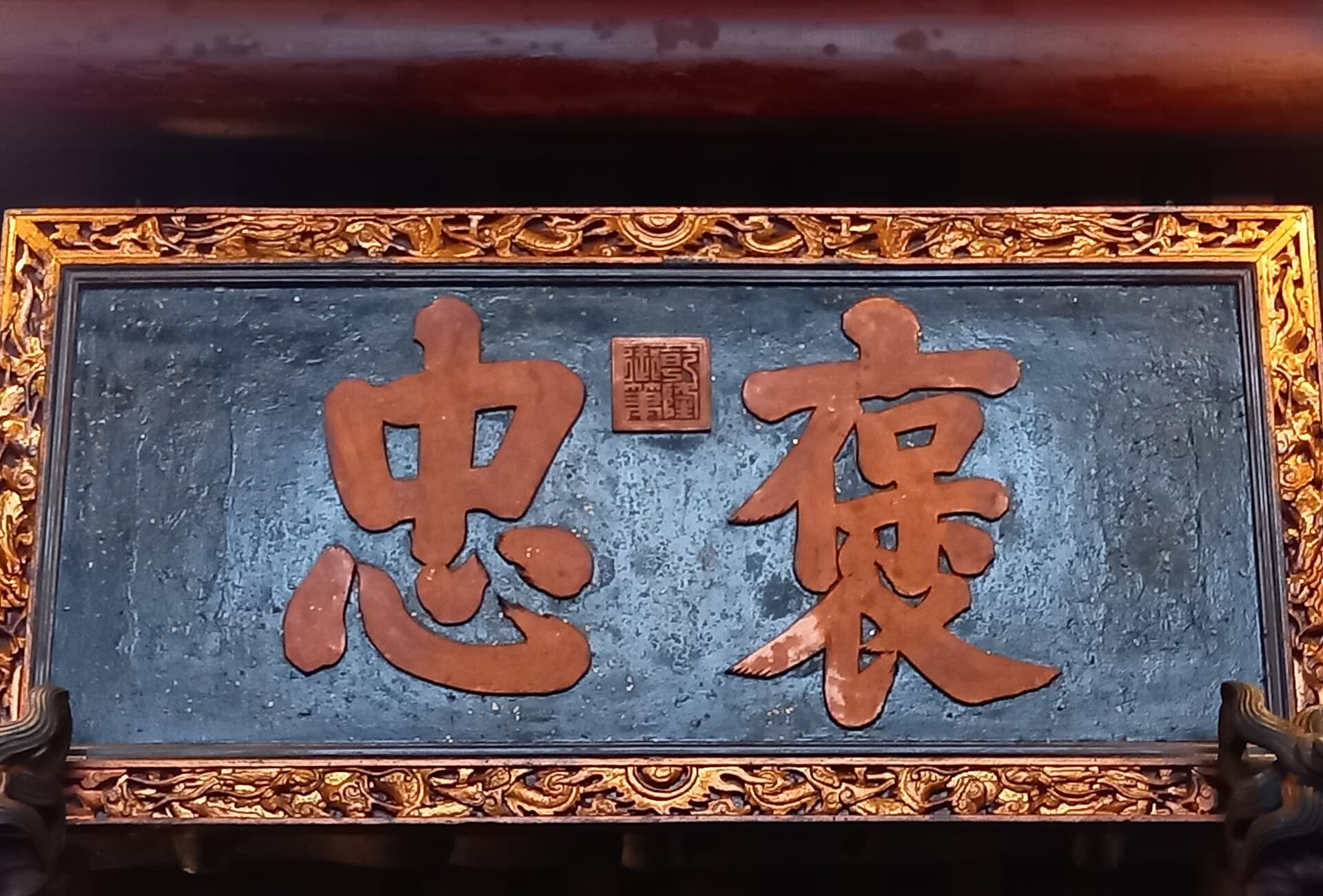
Yimin Temple faces south, built against a mountain on what was later known as the Dianzihu Terrace, overlooking the Fengshan River Valley Plain. With a lower front and higher back, and embracing terrain on both sides, its natural setting is magnificent and grand. Legend has it that the Yimin Tomb is located on one of the three renowned auspicious sites discovered in the Fengshan River basin, known as the 'Sleeping Bull Site' ('Xiong Niu Kun Di Xue'), an excellent feng shui spot. The area in front of Yimin Temple is vast. In addition to the main temple building and the large plaza in front, behind the temple are the Yimin Tomb, its attached smaller tomb, and extensive surrounding gardens, making it an important recreational attraction in the county. The architectural scale of Yimin Temple's main structure is 'two halls, two connecting corridors, and two transverse wings', which is likely the result of the renovation in 1904 (Meiji 37). The Sanchuan Hall (front hall) is five bays wide, with the central three bays recessed to form a porch. The wooden and stone carvings on the archway façade are extremely exquisite. The central shrine of the Main Hall (Zhengdian) enshrines the spirit tablet of the 'Imperially Sealed Loyal Yimin of Guangdong'. Above, a small chamber is specially built in the center of the horizontal lattice window to house the Imperial Edict tablet, while the Imperial 'Baozhong' (Commendation of Loyalty) plaque hangs above the main beam. Both are important artifacts of this temple. To the left and right of the Main Hall are enshrined the Three Mountain Kings, Guanyin Bodhisattva, and Wugu Ye (God of Five Grains), among others. The right side shrine additionally enshrines the Earth God (Fude Zheng Shen), as well as the longevity tablets of Dai Yuan-jiu and the founding monk Kaizhi Wu Zen Master. Between the Sanchuan Hall and the Main Hall is an atrium (tianjing), where a rain shelter has been added to increase the space for rituals. On both sides of the atrium are corridors, three bays wide and two bays deep. The rear part of the central bay is partitioned off by a decorative screen (feizhao) to form a shrine. On the 'dragon' side (left) are enshrined the longevity tablets of Lin Xian-kun, Liao Chao-zhen, and Chen Zi-yun, who contributed to the temple's establishment. On the 'tiger' side (right) are enshrined the longevity tablets of Wang Ting-chang, Qian Mao-zu, Wu Li-gui, and Huang Zong-wang, among others. A notable feature of the temple is its abundance of plaques, including many from the Qing Dynasty, and plaques such as 'Jin Zhong Bao Guo' (Serve the Country with Utmost Loyalty) presented by Taiwan Governor-General Hasegawa Kiyoshi, all of which are important artifacts of this temple. The hill behind the temple is where the Yimin Tomb is located. The Yimin Tomb is the burial site for the remains of the Yimin militia. Due to the large number of people, the tomb is also of considerable size. Its current appearance was completed after renovations in 1923 (Taisho 12). In front of the tomb stands a stone stele inscribed with 'General Tomb of the Loyalist Yimin of Guangdong'. The entire tomb features a 'three-tiered curved walls' design (san qu shou), with a semi-circular grave courtyard in front. To its left is a jinting (paper burning pavilion), and to its right is a Fude Shen (Earth God) stele. Not far to the rear left of the Yimin Tomb is an attached smaller tomb, which serves as the burial site for Yimin who sacrificed their lives during the Dai Chao-chun Rebellion, and is smaller in scale.
Discover the Context
No stories linked yet.
Happening at Xinpu Baozhong Temple of the Loyal Martyrs
View CalendarNo upcoming events at this venue.