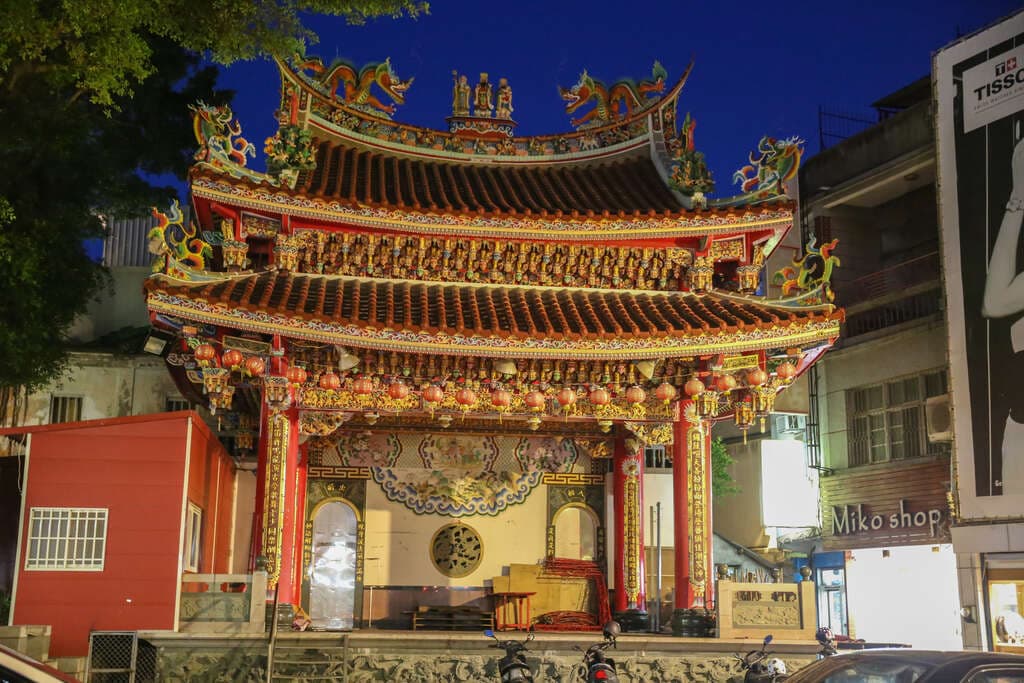
Beizhen Temple
Xuantian Shangdi is commonly known among the people as "Shangdi Gong" (Lord God), also referred to as "Beiji Xuantian Shangdi" (Great Emperor of the North Pole, Xuantian), or Xuánwǔ Dàdì (Great Emperor Xuánwǔ). Since anc…
Visitor Essentials
Xuantian Shangdi is commonly known among the people as "Shangdi Gong" (Lord God), also referred to as "Beiji Xuantian Shangdi" (Great Emperor of the North Pole, Xuantian), or Xuánwǔ Dàdì (Great Emperor Xuánwǔ). Since ancient times, China has traditionally referred to the "Four Symbols" as "Azure Dragon of the East, White Tiger of the West, Vermilion Bird of the South, and Black Tortoise of the North." Due to Taiwan's location in the Northern Hemisphere, people traditionally face south when dwelling, which has led to the custom of using "left, right, front, and back" to denote the four cardinal directions (east, west, south, north). Xuantian Shangdi represents the Polaris constellation, which is why temples dedicated to him are generally built on the north side of towns and villages. The Shangdi Gong worshipped at Beizhen Temple is the guardian deity (Jingzhu) of the Houpu North Gate district. The temple was renovated once in 1984 (73rd year of the Republic) and then rebuilt again in 2000 (89th year of the Republic) to its current form.
Discover the Context
No stories linked yet.
Happening at Beizhen Temple
View CalendarNo upcoming events at this venue.